Views: 0 Author: Site Editor Publish Time: 2026-01-10 Origin: Site


Background
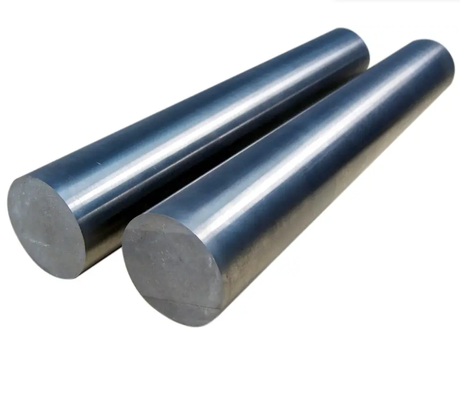
High-temperature alloy GH3230, designated as UNS N06230 (HAYNES 230) and W.Nr.2.4733 in the American standard, is a nickel-based high-temperature alloy developed by Haynes International, Inc. This grade is a Ni-Cr-W-Mo solid solution strengthened wrought high-temperature alloy. Due to its high content of tungsten (W) and low content of aluminum and titanium, this alloy exhibits excellent plasticity and moderate thermal strength, while also combining the excellent oxidation resistance characteristic of nickel-based high-temperature alloys with good stamping and welding process performance. Therefore, it has broad application prospects in aerospace, energy generation, chemical industry, and other fields, especially for applications that withstand high temperatures, high pressures, and severe corrosive environments below 900°C. According to feedback from downstream markets, the high-temperature (850°C) performance of domestically produced GH3230 forgings is unstable, seriously affecting the progress of energy and nuclear reactor projects, and the required materials are largely imported.
This article employs a two-step melting process to produce alloy ingots with varying carbon contents. Subsequently, through processes such as forging, solution treatment, testing, and analysis, target alloy forgings are fabricated. The results indicate that when the carbon content in the alloy falls within a specific range, the alloy exhibits both excellent corrosion resistance and superior high-temperature performance. The comprehensive performance of the product meets the requirements for use in China's aerospace, energy, nuclear reactor, and other fields.
Test Method
Taking into account the diverse characteristics of this material, this paper adopts the classic two-step melting process (VIM+ESR) to prepare alloy billets, ensuring the acquisition of high-purity metallurgical structures. Subsequently, through forging techniques involving two upsetting and two drawing processes, as well as multiple heat treatments, the as-cast microstructure of the alloy is thoroughly fragmented, resulting in a uniform deformed microstructure, ultimately producing the desired alloy forging bars. Then, bars from different batches, with varying carbon (C) contents, undergo high-temperature solid solution treatment. Finally, the high-temperature mechanical properties and corrosion resistance of the forged bars from different batches are analyzed, leading to the conclusions drawn in this paper.

Conclusion
Through comprehensive analysis of high-temperature (850°C) mechanical property testing, metallographic structure analysis, and fracture surface scanning electron microscopy (SEM) morphology of GH3230 with different carbon contents, it was found that within the standard required carbon content range, the high-temperature strength of the alloy gradually increases with increasing carbon content.
(1)When the carbon content of GH3230 alloy reaches 0.081% to 0.138%, the high-temperature (850°C) properties of the bar material after solution treatment at 1230°C can meet the requirements of Rm ≥ 300MPa and Rp0.2 ≥ 150MPa.
(2) The carbide precipitates, primarily M6C rich in tungsten and molybdenum, and M23C6 rich in chromium, are dispersed along the grain boundaries of the alloy. This dispersion hinders the dislocation slip in the alloy, serving as a "pinning" effect, thereby effectively enhancing the high-temperature strength of the alloy.
(3) When the carbon content in the alloy exceeds 0.15%, as the content increases, coarse and irregular carbides enriched at the grain boundaries form deformation stress with the matrix, leading to micro-pores and reducing the high-temperature strength of the alloy.
(4) Excessive carbides enriching the grain boundaries are prone to cause "pitting corrosion" defects in alloys in corrosive environments, thereby reducing their service life.