


Views: 100 Author: EHI Technical Team Publish Time: 2025-12-11 Origin: Site


In industries that rely on heat exchange systems, efficient heat transfer is crucial to maintaining performance, safety, and cost-effectiveness. One of the key components in these systems is the tube sheet, a piece of equipment that helps facilitate the transfer of heat in various applications, such as heat exchangers, boilers, and condensers. While tube sheets may seem like simple components, their role in efficient heat transfer cannot be overstated.
This article will explore what stainless steel tube sheets are, how they function in heat exchange systems, and why stainless steel is the material of choice for manufacturing tube sheets. By understanding the technicalities behind tube sheets and the properties of stainless steel, we can better appreciate their importance in ensuring optimal heat transfer in industrial processes.
A tube sheet is a flat, circular plate that is used to support and seal the ends of the tubes in heat exchangers and other heat transfer devices. The tubes pass through holes in the tube sheet, and the sheet holds the tubes in place, preventing them from moving or leaking. The primary function of the tube sheet is to ensure that the heat exchange process occurs efficiently by facilitating the flow of fluids through the tubes while also ensuring a proper seal between the different sides of the heat exchanger.
Stainless steel tube sheets are tube sheets made from stainless steel, a material known for its excellent corrosion resistance, strength, and durability. The material is often chosen for tube sheets because of the demanding environments in which heat exchangers are used. Stainless steel tube sheets are typically designed to handle high pressures, extreme temperatures, and exposure to corrosive substances, all of which are common in industrial heat exchange processes.
Heat exchangers are devices that facilitate the transfer of heat between two or more fluids, which may be at different temperatures. Tube sheets play a crucial role in the construction and functioning of heat exchangers by securing the tubes in place and ensuring that the heat transfer process occurs efficiently. Here are some of the key functions of tube sheets in heat exchangers:
In a heat exchanger, fluids flow through the tubes, while another fluid flows around the outside of the tubes. The tube sheet holds the tubes in place, ensuring that the two fluids do not mix. The efficient flow of the fluids through the tubes is essential for effective heat transfer. The tube sheet allows for the proper alignment of the tubes, ensuring that the flow rate and pressure are optimized for maximum heat exchange.
Heat exchangers work by transferring heat through the walls of the tubes. For this process to be efficient, there must be a proper seal between the tubes and the tube sheet. If there are leaks, heat will not transfer as effectively, and the system will lose efficiency. Tube sheets provide the necessary sealing to prevent fluid leakage, ensuring that heat transfer occurs through the tube walls rather than through gaps or leaks. This is particularly important in systems where the fluids have different pressures or are highly corrosive.
Tube sheets provide structural support for the tubes in a heat exchanger. The tubes, which are typically made of metal or other materials, are secured into the holes in the tube sheet. This ensures that the tubes stay in place during operation, preventing them from becoming dislodged due to pressure fluctuations or fluid flow. Proper support from the tube sheet is vital for maintaining the integrity of the heat exchanger and ensuring that the system operates as intended.
Heat exchangers often need to be cleaned or inspected to ensure that they continue to operate efficiently. Tube sheets play a key role in this process. Because the tubes are securely held in place by the tube sheet, it is relatively easy to access the tubes for maintenance, cleaning, or replacement. The tube sheet allows for the removal and insertion of tubes without causing damage to the rest of the heat exchanger. This ease of maintenance is particularly important in industries where heat exchangers must be regularly serviced to prevent buildup of deposits or fouling, which can reduce heat transfer efficiency.
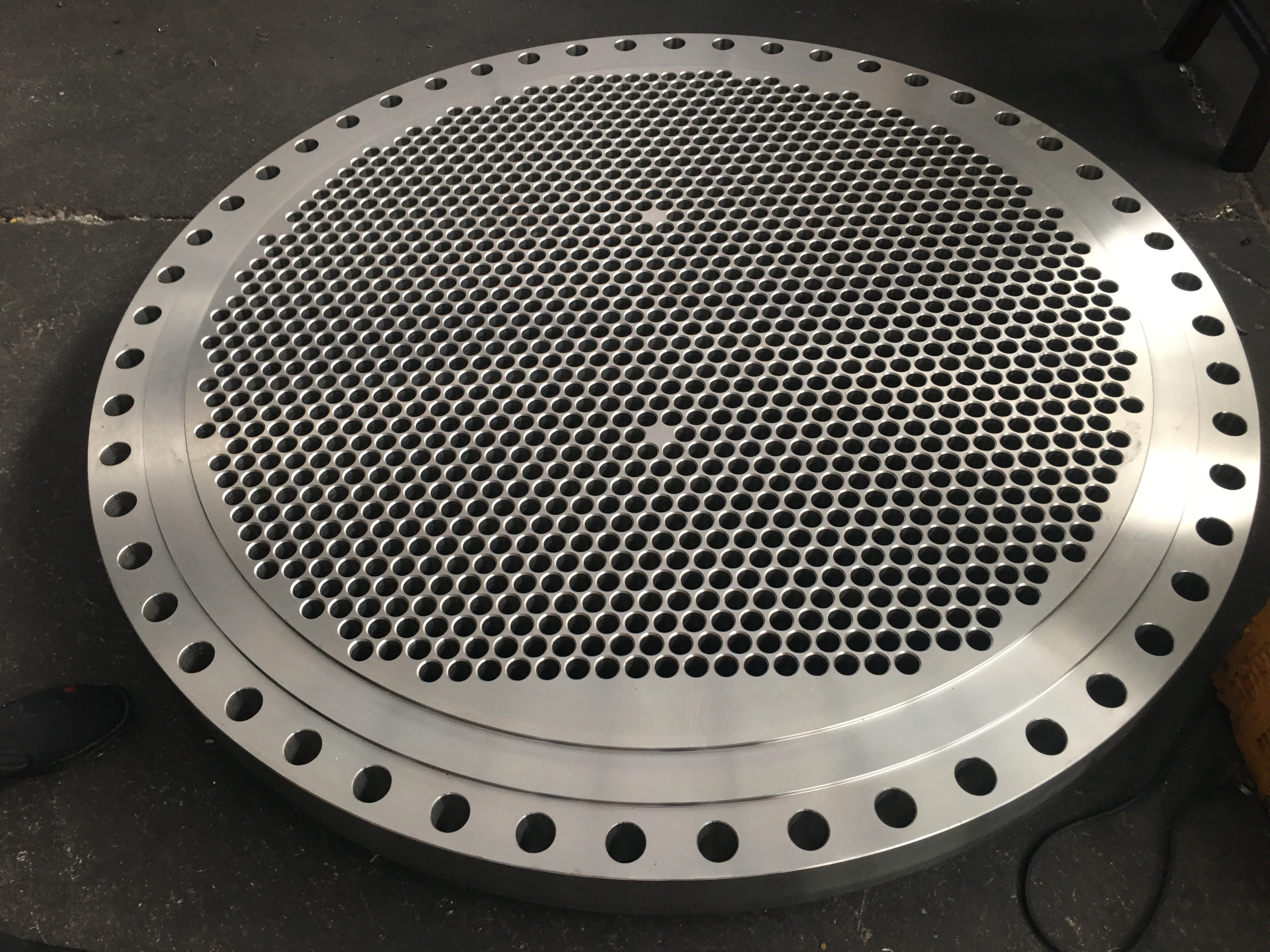
Stainless steel is widely regarded as the best material for manufacturing tube sheets for several reasons. The properties of stainless steel make it an ideal choice for heat exchangers, which are often exposed to high-pressure, high-temperature, and corrosive environments. Here are the key benefits of using stainless steel for tube sheets:
Stainless steel is highly resistant to corrosion, which is a crucial property for materials used in heat exchangers. In many industries, heat exchangers come into contact with fluids that can be corrosive, such as chemicals, saltwater, or acidic substances. Stainless steel’s resistance to rust, oxidation, and chemical attack ensures that tube sheets made from this material will have a long lifespan and maintain their structural integrity even in harsh environments.
In applications where heat exchangers are used to process seawater, acidic solutions, or other corrosive fluids, stainless steel tube sheets are essential for preventing deterioration and maintaining efficiency over time.
Stainless steel is known for its high strength and durability, which makes it an ideal material for tube sheets that need to withstand high pressures and extreme temperatures. In heat exchangers, tube sheets are subjected to mechanical stress, vibration, and thermal expansion. Stainless steel’s strength ensures that the tube sheet will not warp, crack, or deform under these conditions.
This durability is essential in industries such as oil and gas, petrochemical, and power generation, where heat exchangers must function reliably in demanding environments.
Stainless steel has excellent resistance to heat, which is another reason it is commonly used for tube sheets. Heat exchangers operate in environments where temperatures can fluctuate greatly, and stainless steel tube sheets can withstand these temperature extremes without losing their shape or strength.
Stainless steel’s ability to maintain its mechanical properties at high temperatures ensures that tube sheets remain functional and efficient, even in industries that deal with high-temperature fluids, such as power plants or refineries.
Stainless steel can be precisely fabricated into the required shape for tube sheets. The material can be easily machined, drilled, or cut to create the necessary holes for the tubes. This precision is important because the holes must be accurately sized to match the tubes’ diameters and ensure a proper seal. Stainless steel’s formability ensures that tube sheets can be custom-designed to fit specific heat exchanger configurations and requirements.
While stainless steel may initially cost more than other materials, its durability, resistance to corrosion, and strength make it a cost-effective option in the long run. Stainless steel tube sheets require less maintenance and have a longer lifespan compared to those made from other materials, such as carbon steel or aluminum. This long-lasting performance reduces the need for frequent replacements, minimizing downtime and operational costs.
Efficient heat transfer is the primary goal of any heat exchanger, and the tube sheet plays an essential role in achieving this efficiency. By securing the tubes in place and ensuring a proper seal between the fluid and the tube surface, stainless steel tube sheets contribute significantly to the performance of heat exchangers. Here’s how:
In heat exchangers, the efficiency of heat transfer is largely determined by the surface area of the tubes. Stainless steel tube sheets help optimize the arrangement of the tubes within the heat exchanger, ensuring that the maximum surface area is exposed to the fluids. By securely holding the tubes in place, the tube sheet ensures that the heat exchange process occurs efficiently, allowing for maximum heat transfer between the fluids.
The integrity of the seal between the tubes and the tube sheet is crucial for preventing heat loss. If there are gaps or leaks, heat can escape, reducing the overall efficiency of the heat exchanger. Stainless steel tube sheets provide a tight seal, ensuring that the heat is transferred through the tube walls and not lost due to leakage. This tight sealing minimizes energy waste, contributing to the overall energy efficiency of the system.
Stainless steel tube sheets also contribute to better fluid flow within the heat exchanger. By properly aligning the tubes, the tube sheet ensures that the fluids flow smoothly and evenly across the tube surface. This uniform flow helps to distribute the heat evenly, preventing hot spots and optimizing the heat transfer process.
Because stainless steel tube sheets are resistant to corrosion and wear, they contribute to the longevity of the heat exchanger. Over time, corrosion or degradation of the tube sheet can result in leaks, inefficiencies, and the need for expensive repairs or replacements. Stainless steel’s durability ensures that the tube sheet remains in optimal condition for longer, maintaining the efficiency of the heat exchanger throughout its operational life.
Stainless steel tube sheets are a critical component in heat exchangers, playing a key role in ensuring efficient heat transfer, preventing leaks, and enhancing the durability of the system. Their corrosion resistance, strength, heat resistance, and formability make stainless steel the ideal material for tube sheets in a variety of industries, from power generation and oil and gas to chemical processing and food production.
By providing a secure seal and facilitating optimal fluid flow, stainless steel tube sheets help improve the overall performance of heat exchangers, contributing to energy efficiency, cost savings, and longer operational lifespans.
For those looking for high-quality stainless steel tube sheets for their heat exchangers or other industrial applications, working with a reputable manufacturer ensures that you get components that meet the highest standards of performance and durability.


