Views: 0 Author: Site Editor Publish Time: 2026-01-24 Origin: Site


H13 mold steel is a hot work mold steel suitable for mold manufacturing in high stress and high temperature environments. It contains high carbon, high vanadium, and appropriate amounts of alloying elements such as chromium and molybdenum, and has good hardenability, wear resistance, and thermal cracking resistance. These characteristics make it an ideal material for manufacturing plastic molds, aluminum alloy die-casting molds, hot pressing molds, and precision cold stamping molds. However, large section H13 mold steel is prone to segregation and internal problems, which affect the quality and service life of the mold. In response to this challenge, by precisely controlling the chemical composition of H13 mold steel, optimizing smelting, forging, and heat treatment processes, the uniformity of the microstructure has been successfully improved and the grain size has been refined, thereby enhancing the overall performance of large H13 mold steel.

Composition Design
The chemical composition design of H13 mold steel adopts the standard upper limit of carbon (C) content to make the material have high hardness and wear resistance;
The chromium (Cr) content should be consistent with the standard to balance hardenability, corrosion resistance, and heat resistance;
The manganese (Mn) content should be consistent with the standard to improve hardenability and strength, while maintaining good toughness;
The selection standard for molybdenum (Mo) content has a lower limit to moderately improve thermal strength and toughness, and avoid excessive cost increase;
The lower limit of vanadium (V) content selection standard is used to refine grain size, improve material strength and toughness, while controlling costs;
To reduce the brittleness and plasticity of materials and increase the content of sulfur (S) and phosphorus (P);
Strictly control gas elements such as nitrogen (N), hydrogen (H), and oxygen (O) to reduce porosity and inclusions, ensuring the purity and stability of materials.
Only by precisely controlling the chemical composition of H13 mold steel can we produce high-performance and stable oversized H13 mold steel that meets the strict requirements of the high-end market.
Optimization of Production Process
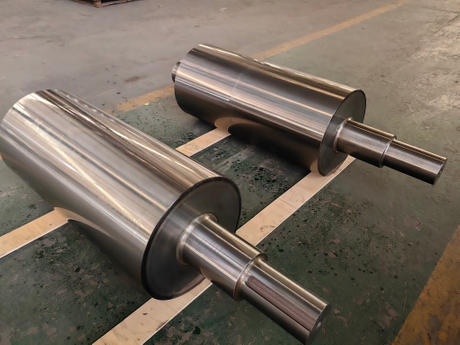
The production process of H13 mold steel is to first use electric slag remelting smelting, then heat forging, followed by cooling annealing treatment, and finally rough machining treatment.
Industrial Smelting
The production process involves pre melting slag, arc initiation, melting, shrinkage treatment, power-off cooling, and demolding.
Heating forging
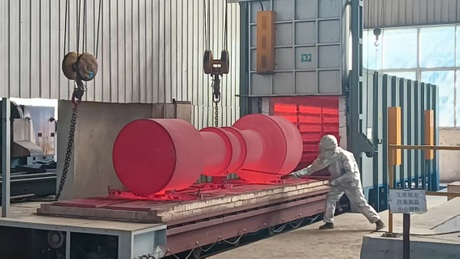
The heating stage of H13 mold steel before forging needs to ensure uniform heating of the cast billet, so the heating time and average hot section temperature should be strictly controlled, with the temperature controlled between 1220 and 1240 ℃. If cracks appear on the surface of the forging, they should be promptly cleaned. The forging ratio should be greater than 6 using the process of 4 times rough drawing and KD drawing to increase core deformation and ensure the density and uniformity of the steel structure. Strictly control the final forging temperature to ensure it is not lower than 850 ℃, in order to avoid cracks on the surface of the forging blank, especially on the edges and corners, during the forging process. The forging is cooled to room temperature using a stepped cooling method, during which the cooling process must be strictly controlled to reduce internal stress and deformation and extend the service life of the mold.
Annealing and Heat Treatment
In order to prepare for subsequent heat treatment work and avoid stress during forging, annealing process should be carried out first. Before conducting spheroidization annealing, the forging temperature must be maintained above 500 ℃. Before annealing, a normalizing ultrafine treatment is required, with the insulation temperature controlled at 1020-1040 ℃ and the cooling rate appropriately controlled. The purpose of doing so is to refine the grain size while effectively improving the segregation and network carbides of the forging blank, ensuring a neat structure. During spheroidization annealing treatment, the annealing temperature should be set at 850-870 ℃ to facilitate the adjustment of carbides and the refinement of microstructure. Adopting a stepped cooling and temperature controlled annealing method to prepare for the final heat treatment.
The heat treatment process includes quenching and secondary tempering. Firstly, preheat at a temperature of 790 ℃± 15 ℃ for 10 minutes, then heat at a temperature of 1010 ℃± 5 ℃ for 10 minutes, followed by oil cooling, and finally hold at a temperature of 550 ℃± 6 ℃ for 2 hours before tempering twice.
Rough machining treatment
After annealing treatment, the product is inspected to ensure its structural integrity and absence of defects such as cracks. Subsequently, turning processing is carried out using a larger cutting depth and feed rate. Generally, the cutting depth is controlled at 3-5 mm, the feed rate is controlled at 0.3-0.5mm. r ^ -1, and the cutting speed is selected at 100-150 m. min ^ -1. Clean and rust proof after processing.
Conclusion
To improve the uniformity of the microstructure of H13 mold after steel forging, design its chemical composition and optimize its manufacturing process. Reasonably plan the forging process of H13 mold, use electric slag remelting furnace to prepare H13 mold steel, and implement annealing and heat treatment. Then, the uniformity of the microstructure of the H13 mold manufactured was inspected. Compared with ordinary cast steel ingots, the mold steel after electric slag remelting had better uniformity and density of microstructure, and the low magnification microstructure was significantly improved.