


Views: 0 Author: Site Editor Publish Time: 2026-04-29 Origin: Site


Industrial engineering sits at a unique crossroads today. Material science constantly drives structural innovation. Simultaneously, procurement teams seek reliable, cost-effective scaling solutions. Bridging this critical gap requires high-performance components capable of enduring extreme-stress environments. You need materials engineered to survive punishing conditions without failing unexpectedly.
Ordinary metals often crack, warp, or deform under intense operational pressure. Forged alloy steel solves this fundamental problem perfectly. It delivers unmatched strength and resilience for your most demanding critical applications.
This guide moves far beyond basic metallurgical definitions. We provide practicing engineers and strategic buyers with a highly concrete evaluation framework. You will learn exactly how to assess mechanical properties and compare competing production methods. Furthermore, we equip you with the knowledge to vet potential manufacturing partners effectively.
Material Synergy: Forged alloy steel combines specific performance-enhancing elements (like Chromium, Molybdenum, and Nickel) with the grain-refining power of mechanical compression.
Performance vs. Castings: Offers superior tensile strength, fatigue resistance, and structural uniformity by eliminating the internal voids common in cast alternatives.
Cost-to-Lifespan ROI: While upfront tooling and production times are higher, the extended lifespan in heavy-duty applications (aerospace, oil & gas) significantly lowers total cost of ownership.
Sourcing Priority: Choosing the right manufacturing partner requires evaluating their temperature control capabilities, die maintenance protocols, and metallurgical testing standards.
At its core, Alloy Steel Forging applies extreme thermal and mechanical pressure to customized metal blanks. Metallurgists carefully mix base carbon steel alongside targeted performance-enhancing elements. These added elements range from 1.0% to 50% of the total material weight. The intense application of massive hydraulic or mechanical pressure fundamentally alters the internal microstructure.
This precise process creates a massive grain flow advantage. Mechanical compression physically aligns the internal metallic grain structure. It forces the grains to perfectly match the contoured shape of the final engineered part. You completely eliminate dangerous internal porosity and microscopic voids. This structural alignment maximizes directional strength in highly specific ways. Conventional machined or cast parts leave a chaotic, random grain structure prone to sheer failure. Conversely, forged components actively resist applied stress along precise, predictable load paths.
Working temperature dictates the specific capabilities of the shaping process. Manufacturers generally classify these methods into three distinct operational categories:
Temperature Classification | Operating Range | Primary Engineering Advantage |
|---|---|---|
Hot Forging | 950–1250ºC | Best for molding complex shapes easily. It requires significantly lower forming forces. |
Warm Forging | 750–950ºC | Balances strict dimensional precision alongside moderate material ductility safely. |
Cold Forging | ≤150ºC | Ideal for exacting tolerances and superior surface finishes. Requires immense mechanical force. |
Engineers must critically evaluate several performance dimensions before choosing a specific material specification. Fatigue and impact resistance usually dominate this technical conversation. You purposefully select specific chemical elements to achieve highly desired mechanical traits. Nickel adds remarkable structural toughness and impact resistance. Chromium provides excellent surface wear characteristics and deep corrosion resistance. Molybdenum increases high-temperature strength dramatically.
The physical forging process exponentially amplifies these elemental benefits. High-stress rotating components demand this superior resistance daily. Engine crankshafts, heavy machinery gear blanks, and high-pressure fluid valves rely on it heavily. They must survive millions of operational cycles without manifesting dangerous fatigue cracks.
Predictability and consistency represent another major evaluation factor. Advanced closed-die forging ensures strict dimensional repeatability across massive production cycles. You can produce thousands of individual units featuring virtually identical physical properties. This unwavering consistency matters deeply for heavily regulated, compliance-driven industries. The aerospace, defense, and medical device sectors rely entirely on this exact replication to maintain their safety certifications.
Finally, you must consider the critical weight-to-strength ratio. Modern engineering demands exceptionally strong parts. However, you do not want unnecessarily heavy assemblies. The immense structural integrity of forged material allows engineers to purposefully design much lighter, thinner components. They successfully shed unneeded bulk from their final designs. They accomplish this weight reduction while never sacrificing maximum load-bearing capacity. You achieve leaner, more efficient mechanical systems while strictly maintaining operational safety margins.
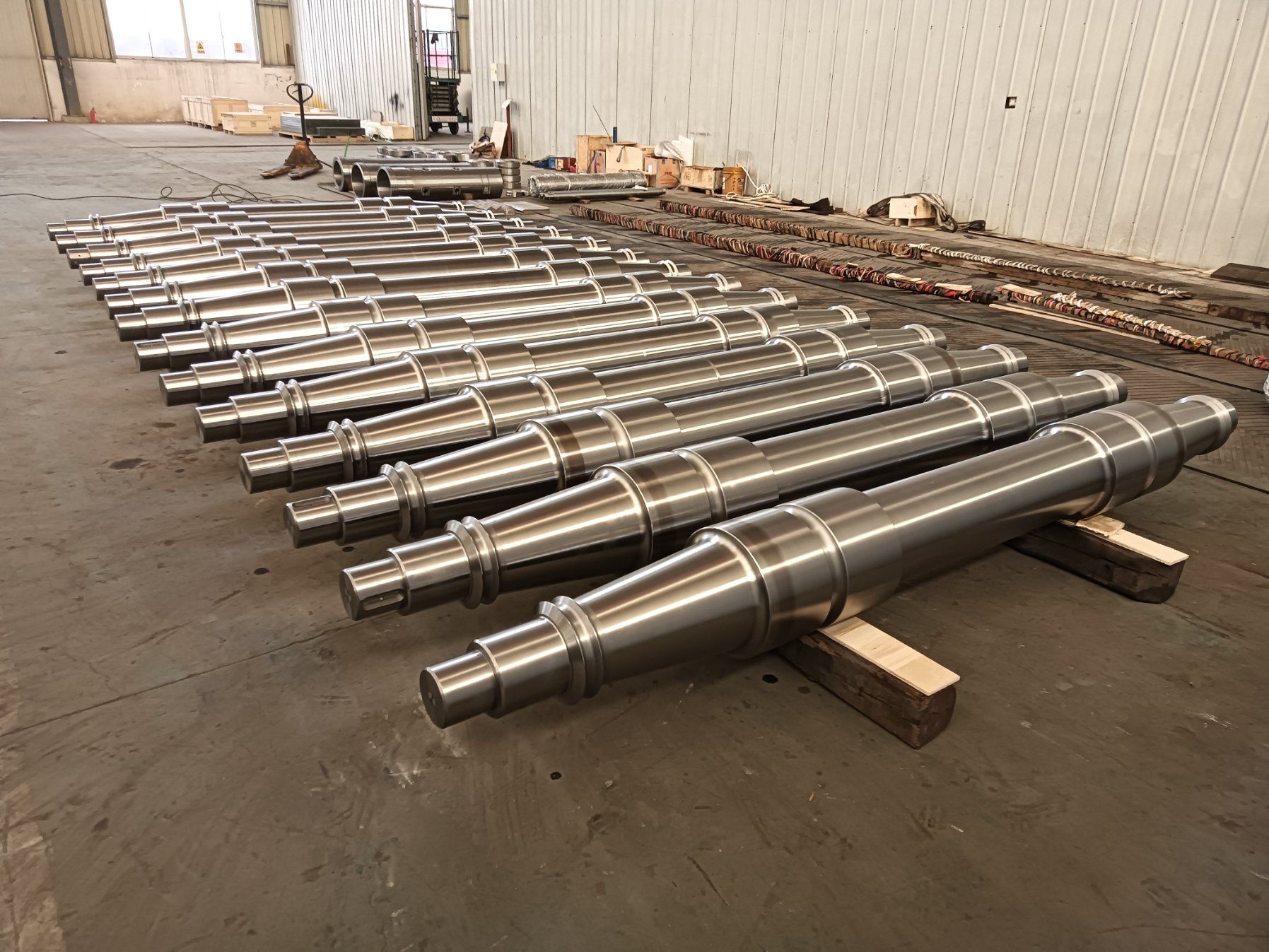
You will inevitably encounter several highly standardized material grades working in this specialized field. Each specific grade serves distinct, demanding industrial requirements reliably.
4140 Steel: This highly versatile grade provides exceptional tensile strength and torsional resistance. It features a perfect metallurgical mix of chromium and molybdenum. Engineers frequently specify 4140 for heavy automotive axles and high-stress oil field drilling components.
4340 Steel: Adding a significant percentage of nickel creates this incredibly tough variant. It easily resists sudden, heavy shock loads without fracturing. You will often find 4340 specified in commercial aircraft landing gear and heavy earth-moving machinery shafts.
8620 Steel: This specific grade responds beautifully to custom case-hardening treatments. It develops a remarkably tough outer wear surface while retaining a flexible, shock-absorbing inner core. Manufacturers utilize it heavily for customized ring gears and engine pinions.
Procurement teams can readily purchase these advanced materials in various standard physical formats. Alloy Steel Forgings Round Bar stands out as an incredibly popular, accessible choice. These long, raw metallic cylinders serve as versatile starting stock for custom fabricators. Skilled machinists use them to create further specialized components on demand. You can cut, turn, thread, and mill them directly into finished custom parts.
Choosing strategically between custom near-net shapes and standard stock requires careful financial thought. You might order raw round bar for rapid, low-volume, in-house machining tasks where speed matters most. Commissioning custom near-net-shape closed-die forgings makes considerably more sense for high-volume orders. It drastically reduces wasted raw material and cuts down incredibly expensive CNC machining hours.
Engineers and procurement teams frequently debate between specifying forging versus casting. We aim to provide a highly transparent, objectively unbiased comparison here. You need clear, verified facts to make sound, defensible engineering choices.
Strength & Durability (Winner: Forging)
Forging inherently creates an incredibly dense, unified metallic structure. You completely eliminate cooling shrinkage issues. You remove hidden gas porosity entirely. The physical process leaves absolutely no hidden internal cavities. Therefore, it serves extreme high-pressure and high-temperature environments far better than any comparable casting method.
Design Complexity (Winner: Casting)
Casting handles exceptionally intricate internal geometry beautifully. Molten liquid metal flows easily into highly complex mold shapes. You can create convoluted, multi-chambered fluid pump housings quite easily. Forging such intricate internal cavities remains physically impossible or highly cost-prohibitive due to die extraction limitations.
Production Risks
Both manufacturing methods carry their own unique production risks. High-volume closed-die forging occasionally suffers from mechanical eccentricity or subtle die shift. Misaligned dies quickly create asymmetrical, out-of-tolerance parts if operators fail to monitor the presses. Conversely, mass-production casting faces very different fundamental dangers. You constantly risk incomplete mold-fill, brittle cooling zones, or hidden internal voids compromising part integrity.
Cost Dynamics
Closed-die forging strictly requires a considerably higher initial tooling investment. You must custom design and precision-cut extremely heavy, durable steel dies. However, you gain exceptional long-term reliability in return. You will experience vastly reduced failure rates in the field. This improved durability lowers your ongoing replacement cycles and mitigates expensive emergency maintenance labor over the entire product lifecycle.
Choosing the wrong manufacturing supplier introduces massive, cascading supply chain risks. You must evaluate potential vendor partners carefully before committing capital.
First, deeply examine their specific temperature control infrastructure. Precise thermal management remains critical to metallurgical success. Poor induction heating leads to severe material degradation and scaling. Uncontrolled, rapid cooling causes dangerous microscopic cracking during the post-press phase. You need a trusted partner actively utilizing advanced optical pyrometers and fully automated oven controls.
Next, investigate their internal tooling and die maintenance programs thoroughly. Heavy repetitive use wears down hardened steel dies surprisingly quickly. A highly competent supplier actively manages die wear through strict internal protocols. They repair, recut, or entirely replace tooling long before dimensional issues arise. This highly proactive approach prevents creeping dimensional inconsistencies. It essentially eliminates rough surface defects in all subsequent production batches.
Finally, prioritize robust value-added capabilities. Choose a special steel forgings manufacturer offering comprehensive, end-to-end processing services. Relying heavily on multiple scattered vendors dramatically increases lead times and shipping costs. Look specifically for fully integrated in-house heat treatment facilities. Demand rigorous, certified non-destructive testing (NDT) capabilities. Check if they provide precision finish machining. A single accountable source essentially guarantees final dimensional accuracy and strict metallurgical compliance.
Selecting the right forged alloy steel secures your long-term project success safely. It represents a vital investment in mechanical reliability and field safety. Critical load-bearing applications demand robust materials capable of surviving extreme daily punishment seamlessly.
Take decisive action before reaching out to potential suppliers. Prepare your comprehensive technical drawings first. Identify your expected operational stress loads clearly. Define your required dimensional tolerances precisely. Gathering this essential data simplifies the RFQ process immediately. You will secure accurate pricing and highly capable manufacturing partners much faster.
A: Carbon steel relies primarily on carbon content for structural strength. Alloy steel actively adds specific performance elements like Chromium, Molybdenum, and Nickel. These intentional additions dramatically enhance corrosion resistance, surface hardness, and extreme heat tolerance. This makes alloy variants ideal for harsh industrial environments where standard carbon steel would quickly degrade.
A: They typically require higher upfront investments due to expensive steel tooling and custom die creation. However, they deliver vastly superior lifecycle reliability. The resulting parts rarely fail under pressure. This significantly reduces expensive operational downtime, constant replacement costs, and intensive maintenance labor. Over time, forging often proves highly economical.
A: Practical size limits depend strictly on the manufacturer's specific press tonnage capabilities. Typical closed-die parts range from a few ounces up to 100 pounds easily. Massive hydraulic presses can forge components weighing several tons, but sourcing such extreme capacities requires specialized heavy-industrial manufacturing partners.
A: The extreme mechanical pressure and rapid cooling cycles generate significant internal material stresses. Post-forging heat treatment effectively relieves this trapped residual stress. It also finalizes the crystalline structure permanently, locking in the specific mechanical properties required by your engineering specifications, such as exact yield strength and surface hardness.


