What Is an Eccentric Shaft?
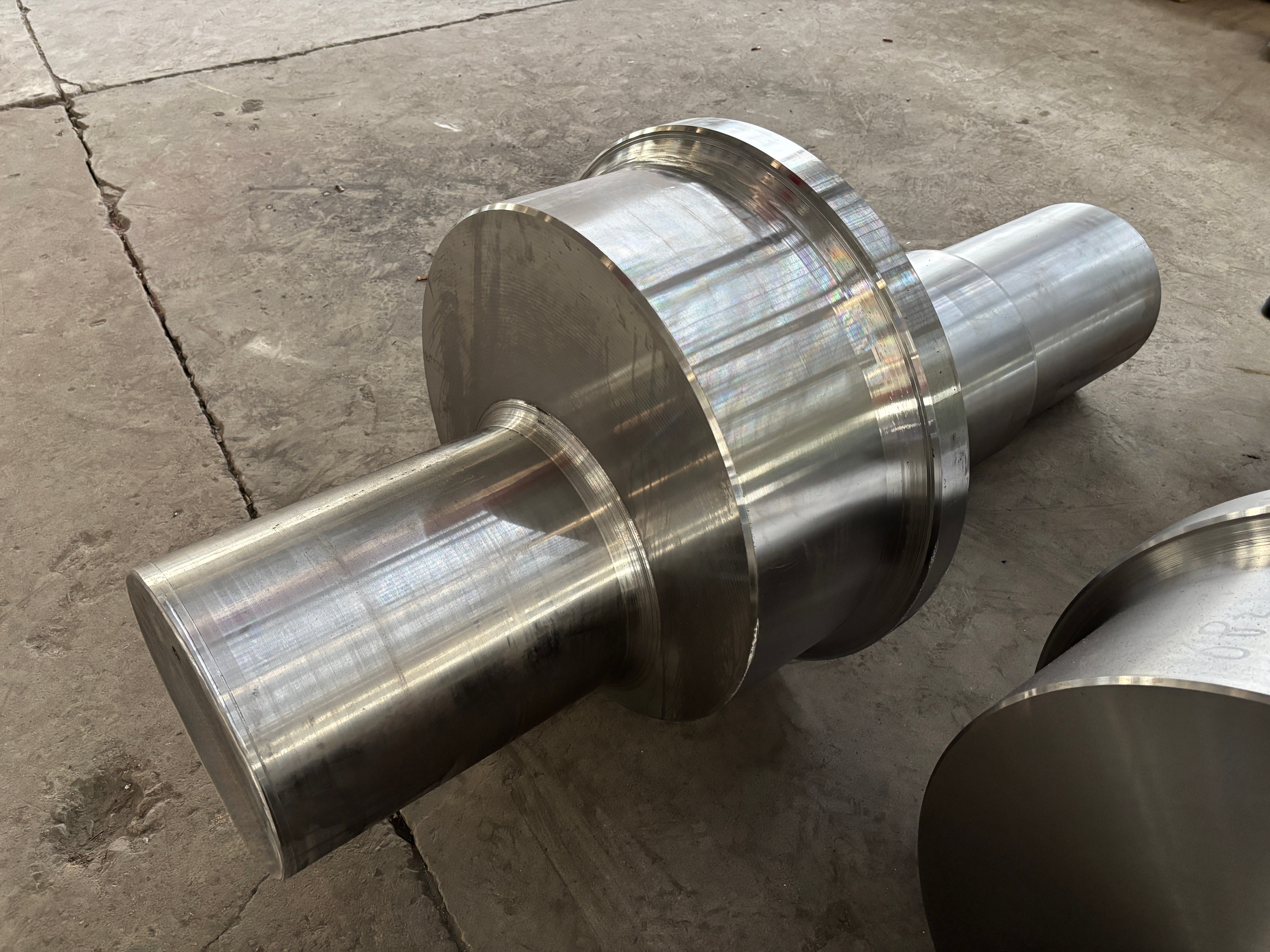
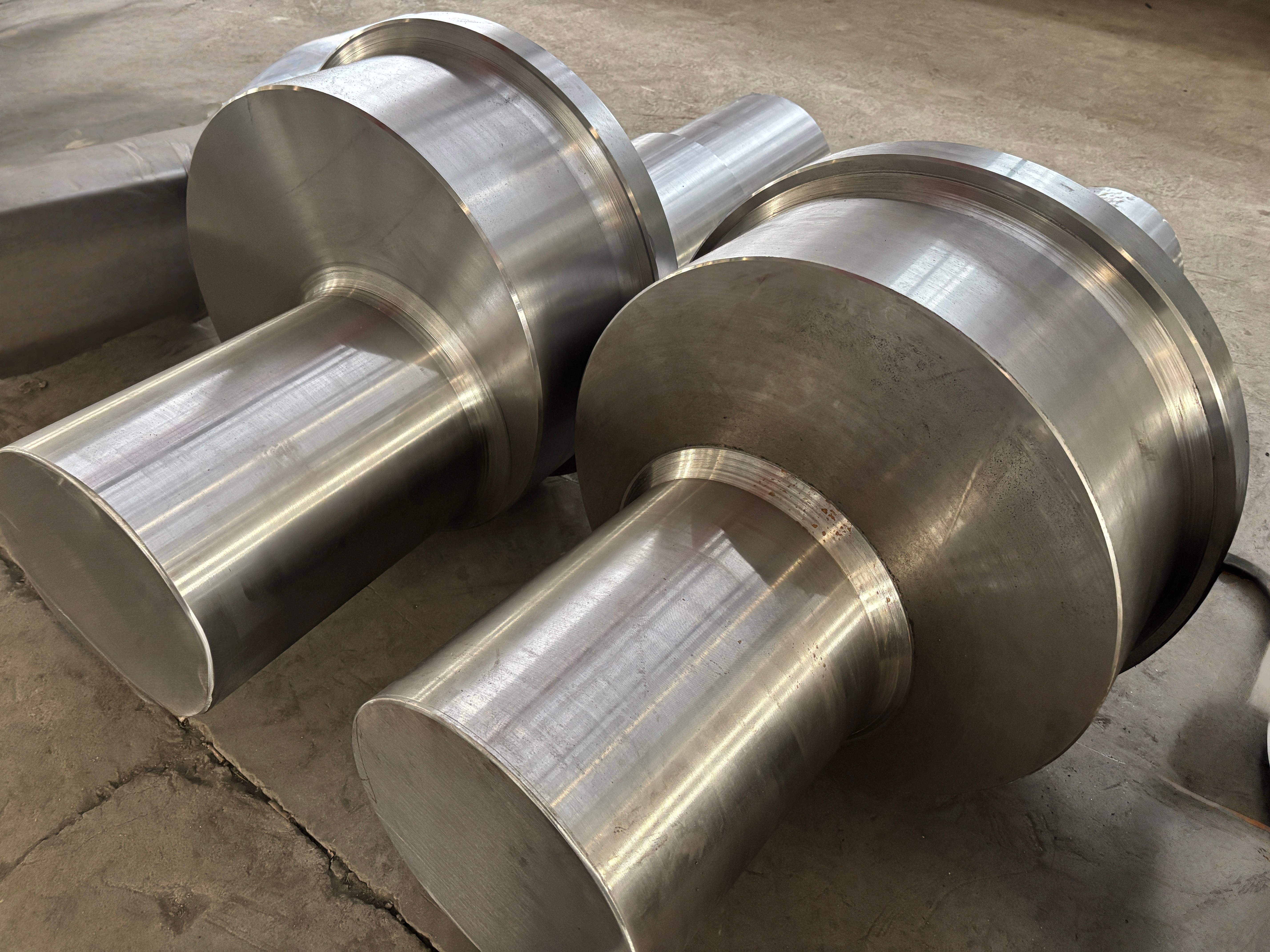
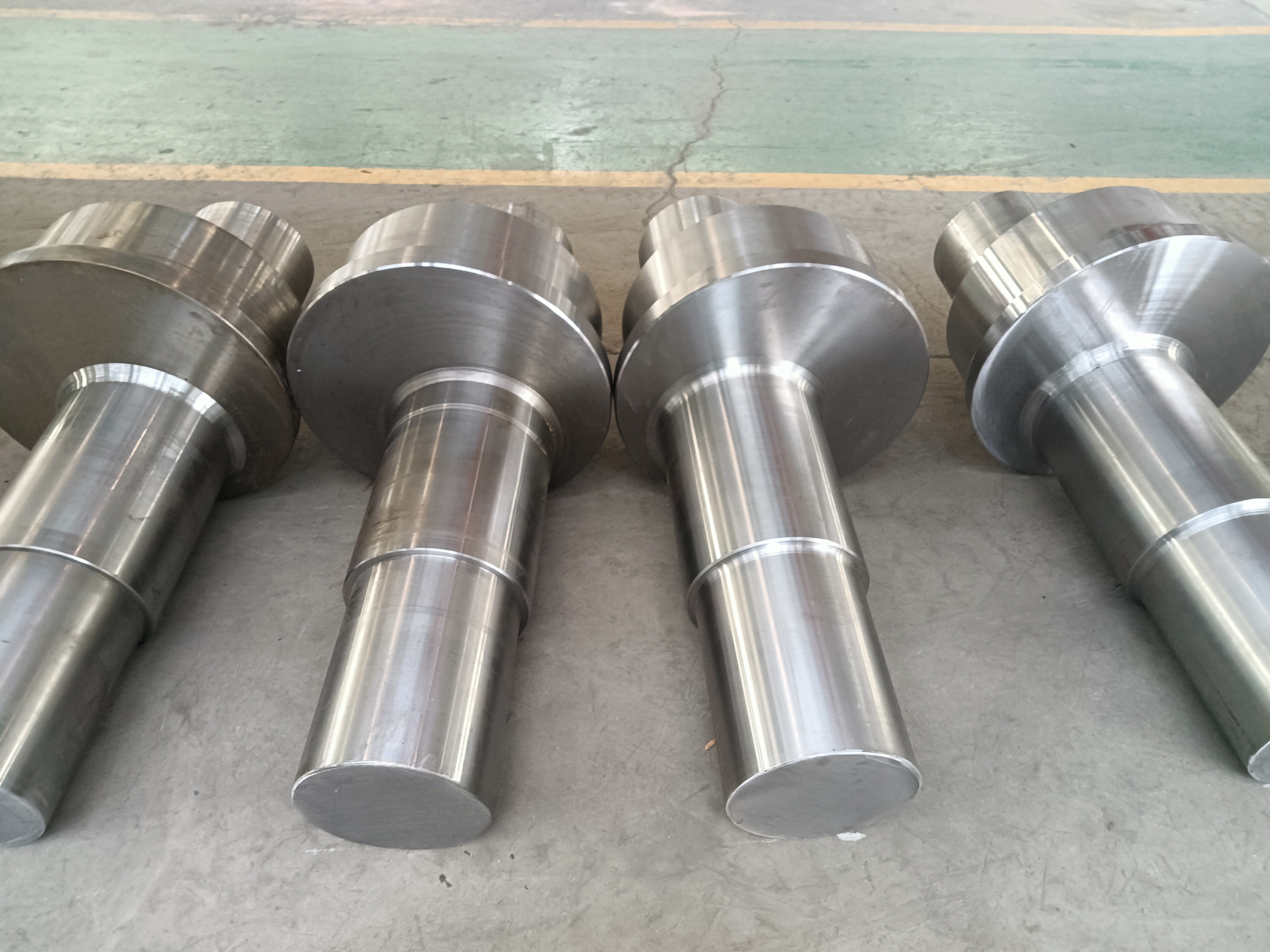
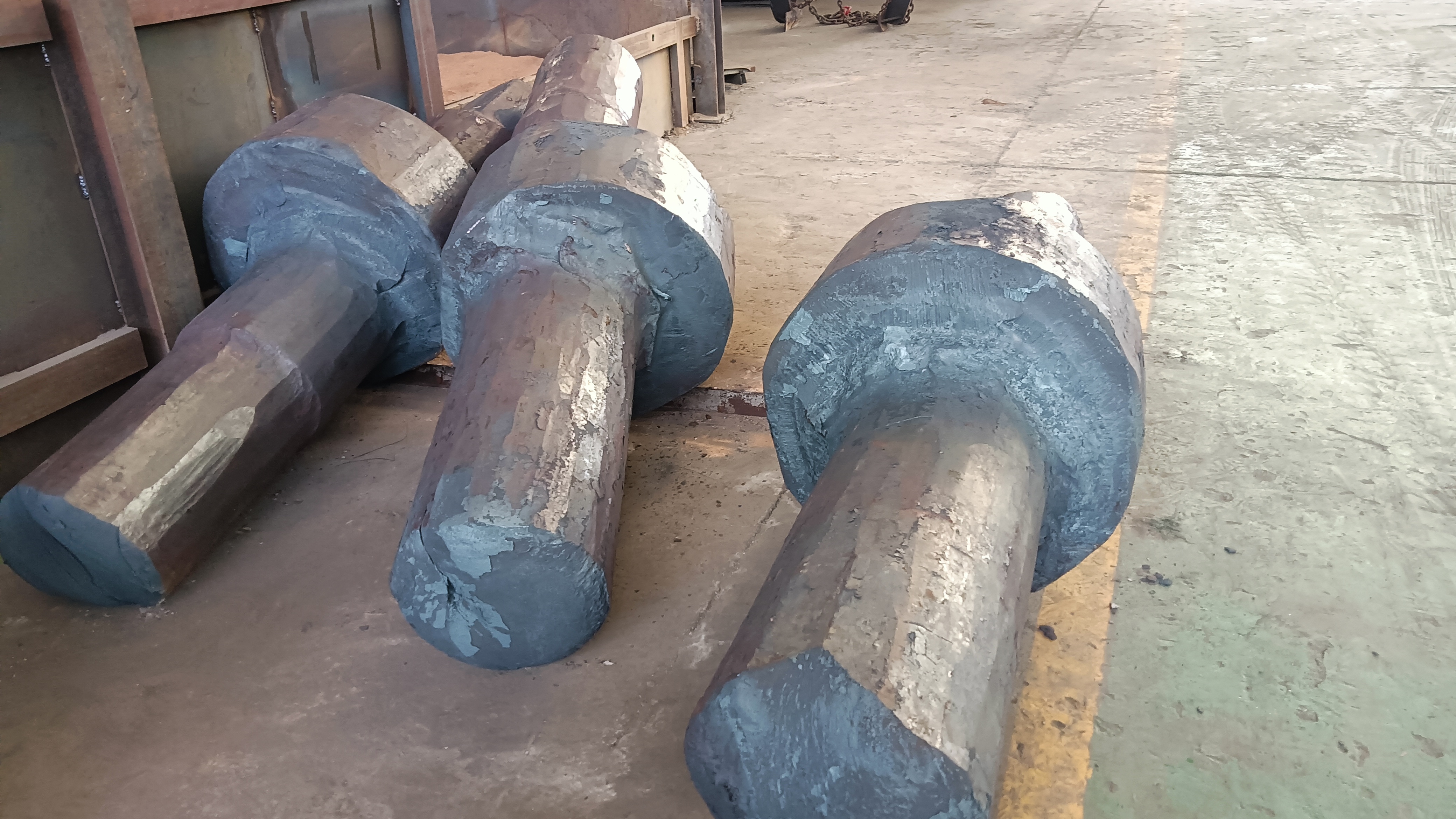
An eccentric shaft belongs to the special category of crankshafts. As a core transmission component for heavy-duty industrial equipment, it has a fixed offset between the shaft axis and outer circle center. It mainly converts the rotary motion of motors into reciprocating swing or linear reciprocating motion.
Why Heavy Duty Eccentric Shaft Choose Forging Process?
Compared with direct cutting which wastes materials and casting that results in loose internal structure, forging technology applied to heavy eccentric shafts can greatly enhance density and strength. The shafts can withstand massive centrifugal force and alternating stress at high rotating speeds and avoid premature fatigue fracture, which is critical for safe equipment operation.
Given its asymmetric shape, an eccentric shaft is far harder to forge than an ordinary forged shaft.
Our company adopts open die forging to tackle this challenge,which is suitable for forging large eccentric shafts.
Application
Crushing Equipment
Ore crushing machines including jaw crushers, cone crushers, impact crushers, etc. Driven by eccentric shafts, movable jaws and crushing hammers perform high-frequency reciprocating motion. Bearing high-intensity impact loads, eccentric shafts serve as core load-bearing and transmission components of crushing equipment.
Vibration Equipment
Vibrating screens, vibrating feeders, vibrating conveyors and other facilities. Stable exciting force is generated by eccentric shaft rotation to ensure continuous and efficient material screening and conveying. Suitable for dusty and heavy-load working environments in mining, building materials, chemical and other industries.
Stamping and Forging Equipment
Small stamping presses, forging machinery, hydraulic presses and related devices. Leveraging the reciprocating transmission property of eccentric shafts, the equipment realizes workpiece stamping and forging forming, applicable to industrial precision and heavy-duty stamping conditions.
General Heavy-duty Transmission Equipment
Various heavy reducers, industrial transmission units and reciprocating mechanical equipment. Highly versatile and adaptable to customized heavy-load transmission scenarios.
Material Choice
The heavy-duty eccentric shaft operates persistently under harsh working conditions featuring high torque, high compression resistance, repeated impact and high-frequency fatigue. It is prone to wear, deformation, fracture and fatigue failure. Accordingly, material selection must strictly meet four core criteria: high strength and load resistance, superior wear and fatigue resistance, excellent toughness and stability, as well as favorable machinability and adaptability.
C45 High-quality Carbon Structural Steel (General Heavy-duty Type)
It is the mainstream material for conventional heavy-duty eccentric shafts. Featuring uniform texture and excellent machinability, its overall mechanical properties can be greatly improved by quenching and tempering heat treatment. The finished shaft boasts moderate toughness, stable strength and cost efficiency, suited for medium heavy-load working scenarios such as small and medium-sized crushers, ordinary vibrating equipment and conventional stamping machinery. 40Cr Alloy Structural Steel (High-strength Heavy-duty Type)
With chromium alloy element added, it has markedly better hardenability, torsional strength, wear resistance and fatigue resistance than ordinary carbon steel. Forged and integrally quenched and tempered, the shaft gains compact internal structure, capable of enduring long-term heavy impact and extreme load with low risk of deformation and cracking. Widely applied in harsh working conditions of large mining crushers, heavy vibrating screens and industrial heavy-duty stamping equipment. 42CrMo Ultra-high Strength Alloy Steel (Extreme Heavy-duty Type)
A premium special heavy-duty material with far superior comprehensive mechanical properties to 40Cr. It delivers ultra-high strength, great toughness, outstanding wear resistance, impact resistance and high-temperature fatigue resistance, fitting ultra-heavy, high-frequency and intensive continuous operation. Mainly used for high-end facilities including large mining heavy machinery, heavy forging equipment and special heavy-duty transmission units.
Production Procedure
Raw Material Inspection & Selection
We choose qualified alloy steel ingot including C45, 40Cr and 42CrMo. All raw materials undergo chemical composition analysis and hardness testing to eliminate internal defects.
Free Forging Forming
The heated blank is integrally forged by heavy-duty forging equipment. Multiple times of forging processes refine the metal grain structure, compact the internal texture, and greatly improve the shaft's torsion resistance, impact resistance and overall density.
Rough machining & Stress Relief
After forging, the excess edges and irregular surfaces are removed, and the workpiece is subjected to stress relief treatment.
Quenching & Tempering Heat Treatment
Complete overall quenching and high-temperature tempering to achieve balanced hardness and toughness. The heat treatment greatly improves wear resistance, fatigue resistance and structural stability, enabling the eccentric shaft to adapt to continuous high-frequency impact working conditions of crushers and vibrating equipment.
Precision CNC Finishing Machining
Adopt high-precision CNC lathes and machining centers for fine turning, grinding and positioning processing. Strictly control eccentricity, concentricity, roundness and surface smoothness.
Surface Polishing & Anti-Rust Treatment
The shaft surface is finely polished to remove burrs and tool marks, reducing assembly friction and improving rotation stability. Professional anti-rust oil and packaging are applied to ensure long-term storage and transportation quality.
Strict Quality Inspection & Finished Product Delivery
Final inspections include dimensional tolerance detection, hardness testing, surface flaw inspection and straightness verification.
Only qualified forged eccentric shafts are packaged and delivered, ensuring every finished product meets heavy-duty industrial operating standards.
How Can We Guarantee Our Quality?
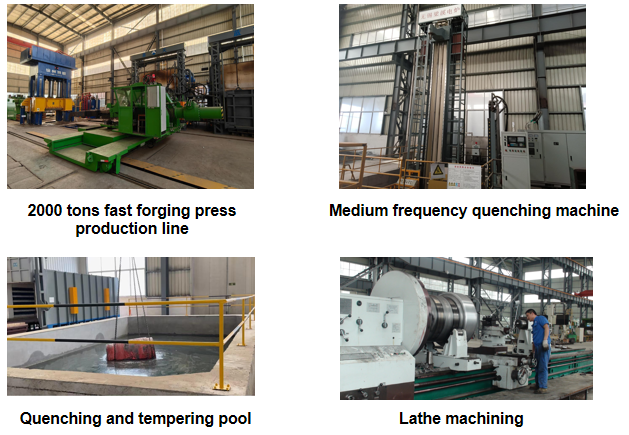
We have complete production equipments. All processing procedures are completed with strict quality control throughout the entire process.
Main Equipment
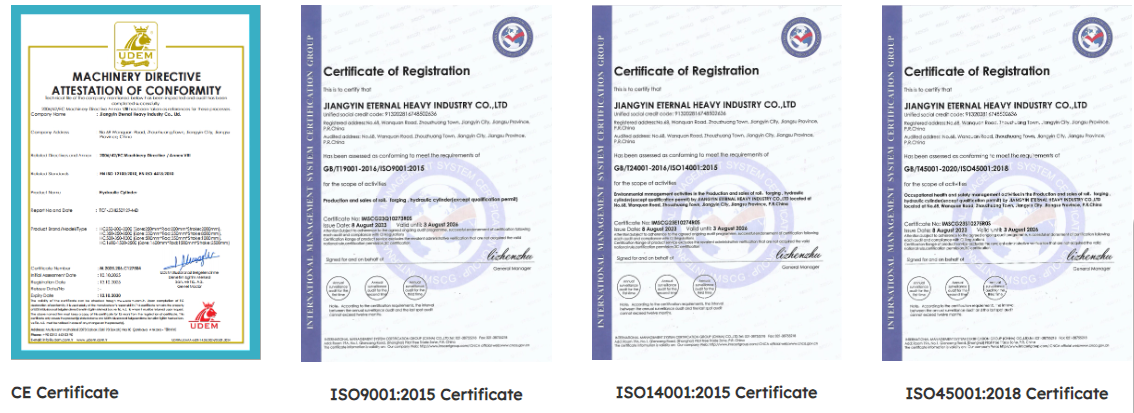
Certificate