|


| Quantity: | |
|---|---|
FORGE-SLEEVE
ETERNAL
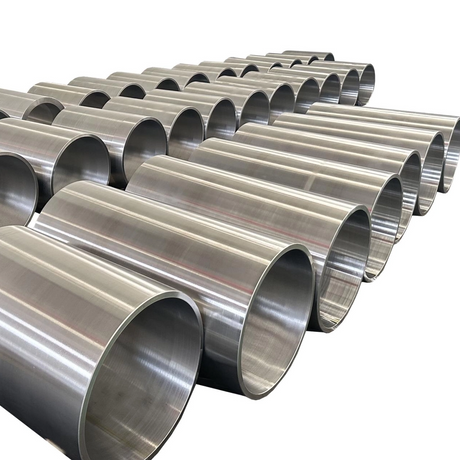
F91 stainless steel sleeve is a martensitic heat-resistant steel forging produced according to ASTM A182 standard, specifically designed for connecting and branching high-temperature and high-pressure pipelines, suitable for harsh working conditions such as power plants and petrochemicals.
F91 Chemical Compisition
| C | Si | Mn | P | S | Cr | Mo | Ni | N | V | Nb |
| 0.08-0.12 | 0.20-0.50 | 0.30-0.60 | ≤0.020 | ≤0.010 | 8.0-9.5 | 0.85-1.05 | ≤0.40 | 0.03-0.07 | 0.18- 0.25 | 0.06-0.10 |
F91 Heat Treatment
F91 is a martensitic heat-resistant stainless steel, with a core heat treatment process of normalizing and tempering, aimed at obtaining tempered martensitic structure, ensuring the matching of high temperature strength, creep resistance, and toughness. The specific parameters are as follows:
Normalization treatment
Temperature: 1040-1080 ℃
Insulation time: determined according to the thickness of the workpiece, generally calculated at 2-4 min/mm, to ensure that the alloying elements (Cr, Mo, V, Nb) are fully dissolved into the austenite.
Cooling method: Air cooling or forced air cooling, quickly cool to room temperature to prevent austenite from decomposing into pearlite or ferrite, ensuring complete transformation into martensite.
Tempering
Temperature: 730-780 ℃
Insulation time: 4-6 hours to ensure sufficient decomposition of martensite, precipitation of small carbides (such as VC and NbC), and elimination of quenching internal stress.
Cooling method: Air cooling, ultimately obtaining a composite structure of tempered martensite and dispersed carbides.
Post weld heat treatment
Due to the high tendency of cold cracking in F91 welding, hydrogen removal and tempering treatment should be carried out in a timely manner after welding:
Hydrogen removal treatment: Keep at 200-250 ℃ for 2-4 hours to remove diffused hydrogen from the weld seam.
Tempering treatment: Insulation at 730-760 ℃, with parameters consistent with overall tempering, to eliminate welding residual stress and improve weld toughness.

F91 Mechanical Property
tensile strength Rm MPa | Yield Strength MPa | Elongation A5 % | Reduction of area Z% | Hardness HB | ||
| Rp0.2 | L | Tr | L | Tr | ||
| ≥620 | ≥415 | ≥20 | ≥20 | ≥40 | ≥40 | 190-248 |
F91 Stainless Steel Sleeve Application
F91 stainless steel sleeve is a specialized forged pipe fitting for high temperature and high pressure conditions, mainly suitable for harsh pipeline connection scenarios in energy, petrochemical and other fields.
1. Power industry (core application areas)
Thermal power plant boiler system: used for branch connection and variable diameter transition of high-temperature superheater and reheater pipelines in boilers. In a high-temperature steam environment of 550-650 ℃, it can withstand high pressure for a long time (the pressure of supercritical and ultra supercritical units can reach 25-35MPa), avoiding pipeline deformation or fracture failure due to creep.
Secondary loop system of nuclear power plant: adapted to the auxiliary pipeline connection of nuclear power plant steam generator, capable of withstanding the corrosion and pressure impact of high temperature and high pressure steam, ensuring the sealing and stability of secondary loop medium transportation.
Industrial cogeneration unit: used for local connection of high-temperature flue gas pipelines and steam recovery pipelines in waste heat boilers, adapting to temperature alternating stress caused by frequent start stop.
2. Petrochemical industry
Cracking furnace tube system: In petroleum refining and ethylene cracking units, it is used to connect the branches and short sections of high-temperature furnace tubes (with temperatures up to 700 ℃ or above) in cracking furnaces, resisting corrosion and creep damage from high-temperature oil and gas.
High temperature hydrogenation reactor pipeline: Suitable for high-temperature and high-pressure (temperature 400-500 ℃, pressure 10-20MPa) pipeline connections of hydrogenation units, resistant to corrosion from hydrogen, hydrogen sulfide and other media, and preventing hydrogen embrittlement and cracking.
Coal chemical high-temperature pipeline: used as a branch of high-temperature synthesis gas pipeline for coal to oil and coal to gas plants, suitable for harsh medium conditions containing dust and sulfur.
3. Other specialized industrial fields
High temperature hot air pipeline in the metallurgical industry: used for local connection of high-temperature hot air conveying pipelines in blast furnaces and converters, capable of withstanding hot air temperatures of around 800 ℃ and resisting high-temperature oxidation and wear.
New energy system: In the molten salt pipeline system of a solar thermal power plant, it is used as a branch for transporting high-temperature molten salt (up to 565 ℃), which is resistant to the corrosion and high-temperature creep of molten salt.
F91 Stainless Steel Sleeve Feature
High temperature strength: It can maintain good strength in high temperature environments above 550 ℃. Compared with ordinary carbon steel, it has obvious strength advantages and can effectively withstand the pressure of high-temperature media in pipelines.
Good antioxidant and anti scaling performance: Elements such as chromium and molybdenum form a dense oxide film on the surface of the sleeve, which can effectively prevent high-temperature oxidation and scaling, and extend the service life of the sleeve.
Excellent creep resistance and fatigue resistance: Under continuous high temperature and high pressure, F91 forged high-temperature pipeline sleeves have good creep resistance, which can avoid slow deformation due to long-term stress, and can also withstand certain alternating stress, with strong fatigue resistance.
Its size range following
max diameter 1600mm