


Views: 88 Author: Site Editor Publish Time: 2026-05-21 Origin: Site


In modern strip and foil production, the condition of Cold Rolling Mill Rollsdirectly affects thickness accuracy, surface finish, mill stability, and operating cost. As rolling mills move toward higher speed, tighter tolerances, and longer campaigns, improving wear resistance and extending roll service life become increasingly important, because excessive roll wear can cause gauge deviation, flatness defects, surface marks, and unplanned downtime. The performance of `Cold Rolling Mill Rolls` depends on multiple connected factors, including material quality, heat treatment, surface hardening, grinding accuracy, lubrication, cooling, and maintenance, so achieving longer service life requires a systematic approach rather than a single corrective measure.
● Cold Rolling Mill Rolls require coordinated control of material, heat treatment, grinding, and operating conditions to achieve strong roll wear resistance.
● Stable roll service life depends on both manufacturing quality and disciplined roll maintenance during daily production.
● Roll surface hardening can improve wear behavior, but it must match the roll material and mill conditions.
● Uneven wear, thermal damage, and fatigue failure can often be reduced through correct lubrication, cleaning, and parameter control.
● Longer-lasting Cold Rolling Mill Rolls contribute to lower downtime, better thickness stability, and more consistent surface quality.
The base material is one of the most important factors in the service performance of Cold Rolling Mill Rolls. Clean forged alloy steel with balanced hardness, toughness, and fatigue resistance usually performs better under repeated rolling stress. If the internal structure is unstable or inclusion control is poor, the roll may experience early wear, cracking, or spalling.
Material selection should also match the actual rolling application. Some Cold Rolling Mill Rolls need stronger abrasive wear resistance, while others require better thermal stability or fatigue resistance. A balanced metallurgical design generally performs better than a roll that relies on hardness alone.
The geometric precision of Cold Rolling Mill Rolls strongly influences contact pressure and wear uniformity. If the barrel profile, roundness, or concentricity is not controlled well, local stress concentration may appear during rolling. That kind of uneven loading often accelerates wear and reduces roll service life.
Surface condition is equally important because the roll transfers its condition directly to the strip. Grinding burns, micro-cracks, or waviness can become origins of wear concentration or surface defects. High-quality finishing allows Cold Rolling Mill Rolls to wear more evenly and maintain stable product quality.
Even high-quality Cold Rolling Mill Rolls cannot maintain long service life under unstable rolling conditions. Rolling force, strip tension, speed, cooling, and lubrication all affect friction, heat generation, and surface stress. If these conditions fluctuate too much, wear and fatigue damage usually increase faster.
Process stability is especially important in high-speed production. As line speed increases, thermal load and surface contact become more demanding, making Cold Rolling Mill Rolls more sensitive to lubrication failure or cooling imbalance. Stable mill operation supports both roll wear resistance and profile retention over longer campaigns.
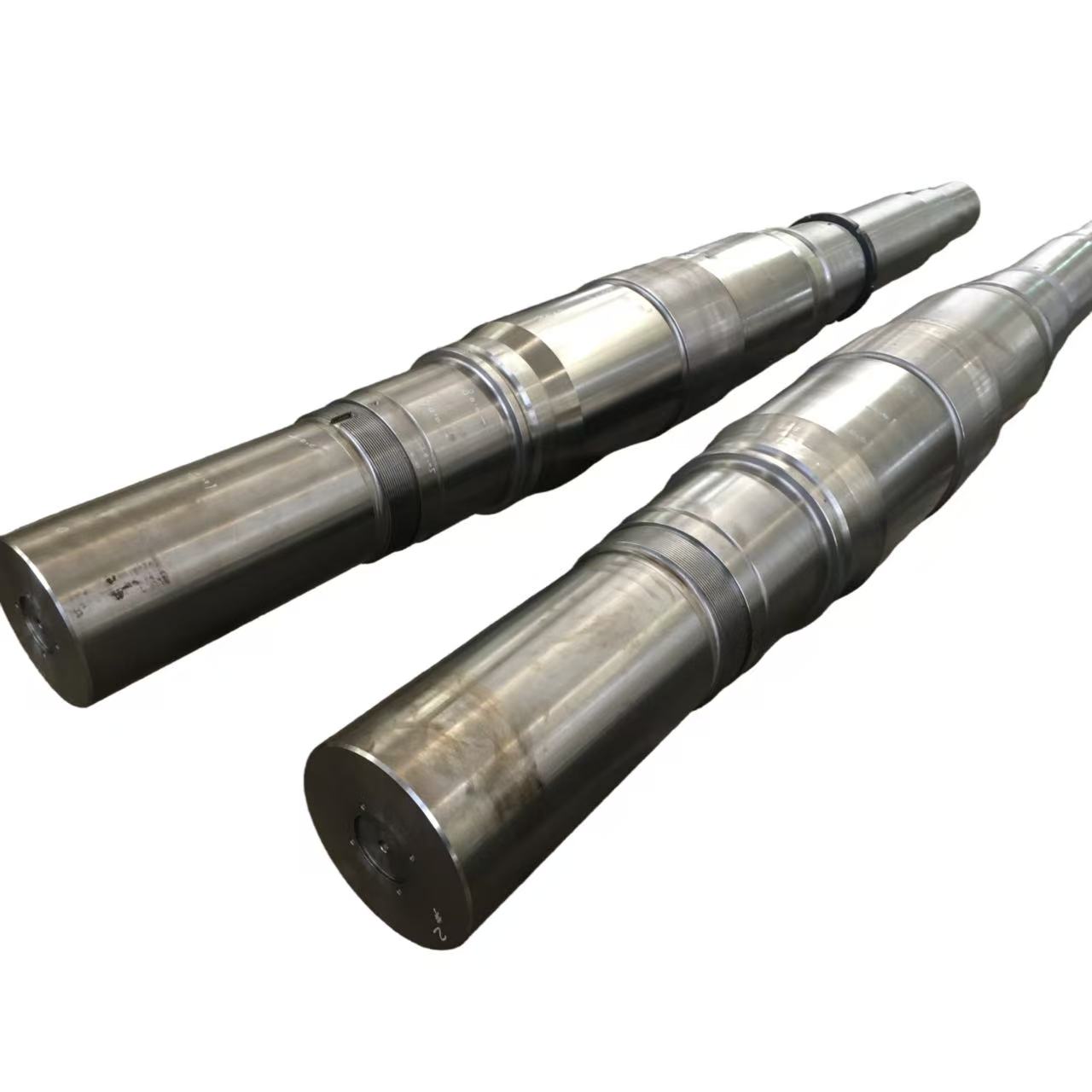
Abrasive wear is a common problem in Cold Rolling Mill Rolls and usually develops through repeated friction, hard particles, or inadequate lubrication. This type of wear gradually removes material from the working surface and reduces profile accuracy. If it continues unchecked, strip thickness consistency and surface quality may begin to decline.
The severity of abrasive wear depends on surface hardness, material structure, and rolling cleanliness. Good roll surface hardening can reduce the wear rate, but contamination and poor lubrication can still cause fast surface loss. Regular inspection is therefore necessary to prevent small wear from becoming a larger profile problem.
Fatigue damage appears when Cold Rolling Mill Rolls experience repeated cyclic loading over long periods. Small cracks may form at or near the surface and then grow until local spalling occurs. Once spalling begins, strip quality can deteriorate quickly and the roll may need to be removed from service.
This type of failure is influenced by material cleanliness, heat treatment quality, and load stability. Rolls with poor residual stress control or insufficient toughness are more vulnerable to fatigue cracking. Stable operating conditions usually improve the fatigue life of Cold Rolling Mill Rolls significantly.
Thermal cracking develops when Cold Rolling Mill Rolls are exposed to rapid temperature changes or uneven cooling. High speed, poor coolant distribution, and unstable lubrication can create thermal stress between the surface and the core. Over time, small cracks may expand and lead to more serious surface damage.
Thermal effects can also distort the roll surface and reduce profile stability. Once profile distortion occurs, the roll may begin to create flatness defects or unstable strip contact. Good thermal management is therefore essential for both roll wear resistance and roll service life.
Improving roll wear resistance begins with choosing the right material for the actual operating conditions. Different applications expose Cold Rolling Mill Rolls to different combinations of pressure, speed, heat, and surface contact. A material that works well in one mill may not perform the same way in another.
Forged alloy steel is widely used because it provides a good balance of strength, toughness, and fatigue resistance. In more demanding cases, enhanced wear-resistant grades may be selected to improve surface durability. The most effective material choice is usually based on the actual wear mechanism rather than on hardness alone.
Heat treatment determines the hardness distribution, residual stress condition, and core support of Cold Rolling Mill Rolls. Proper quenching and tempering can create a working layer that resists wear while still maintaining enough toughness. If heat treatment is inconsistent, the roll may wear too fast or become more prone to cracking.
Roll surface hardening can further improve wear resistance when it is correctly matched to the material and rolling duty. Methods such as nitriding or other surface strengthening processes can reduce early surface loss and improve stability. The best result comes from balancing surface hardness with structural reliability in Cold Rolling Mill Rolls.
Grinding has a major effect on the real service behavior of Cold Rolling Mill Rolls. A stable and accurately ground surface promotes even contact, controlled friction, and smoother wear across the barrel. By contrast, poor grinding can leave waviness, local heat damage, or stress concentration points that shorten roll life.
Final surface integrity should be controlled carefully, especially in precision rolling conditions. Even minor defects such as grinding burns or micro-cracks can later expand under rolling stress. Regular regrinding also supports longer roll service life by restoring profile accuracy and removing early damage before it becomes severe.
Factor | Main Influence | Risk if Poorly Controlled |
Material quality | Fatigue strength and internal reliability | Early cracking and unstable wear |
Heat treatment | Hardness balance and stress control | Premature wear or brittle failure |
Roll surface hardening | Surface durability | Fast surface loss or uneven wear |
Grinding accuracy | Contact stability and profile retention | Waviness and local wear |
Lubrication and cooling | Friction and thermal control | Abrasive wear and thermal cracking |
Roll maintenance | Timely recovery and monitoring | Excessive wear and downtime |
Correct installation is a basic requirement for long roll service life. If Cold Rolling Mill Rolls are installed with poor alignment or unstable support, the rolling load will not be distributed evenly. This often creates local wear, vibration, and unstable strip flatness.
Installation quality also affects dynamic behavior during high-speed operation. Even small alignment errors can gradually damage the roll surface or bearings over time. Careful mounting and mechanical verification are therefore necessary for stable performance.
Lubrication and cooling directly affect the surface condition of Cold Rolling Mill Rolls. Dirty lubricant or contaminated coolant can introduce hard particles into the rolling zone and accelerate abrasive wear. Poor cooling distribution can also create localized thermal stress and shorten roll service life.
Clean rolling conditions reduce both friction and surface damage. Stable coolant flow helps maintain profile stability and lowers the risk of thermal cracking. For this reason, lubrication control and cleanliness are essential parts of daily roll maintenance.
The daily operating strategy of the mill has a strong influence on Cold Rolling Mill Rolls. Overloading, unstable strip tension, and abrupt speed changes can all increase wear and fatigue damage. Rolls generally perform best when the process remains stable and within the intended service range.
Reasonable use also means avoiding shock loading and excessive rolling force. Many cases of early failure are connected to operating conditions rather than material problems alone. Stable process control usually leads to more predictable wear and longer campaigns.
Method | Main Effect | Operational Result |
Upgrade roll material | Better toughness and fatigue resistance | Longer campaign life |
Optimize heat treatment | More balanced hardness | More stable wear behavior |
Improve roll surface hardening | Higher surface durability | Better roll wear resistance |
Improve grinding quality | Better profile and surface integrity | Lower defect risk |
Keep lubrication clean | Less friction and contamination | Reduced abrasive wear |
Schedule roll maintenance | Earlier damage detection | Lower downtime |
A disciplined inspection program is essential for extending the life of Cold Rolling Mill Rolls. Surface wear, profile loss, temperature marks, and early fatigue symptoms often appear gradually before larger failure occurs. Early detection allows the roll to be reground or serviced before more serious damage develops.
Condition monitoring should include both physical inspection and operating observation. Changes in strip quality, rolling force, or vibration may indicate that the roll condition is no longer stable. Consistent monitoring makes roll maintenance more preventive and less reactive.
Regrinding is one of the most effective ways to extend the service life of Cold Rolling Mill Rolls. It restores working geometry, removes early surface damage, and improves the consistency of strip quality in the next campaign. If done at the correct time, it can significantly delay more serious wear or fatigue problems.
The effectiveness of regrinding depends on precision and proper stock removal. Too little removal may leave damage behind, while too much removal can reduce total usable life. Good regrinding practice should therefore be based on actual roll condition rather than on routine alone.
A rational replacement strategy prevents Cold Rolling Mill Rolls from remaining in service beyond their safe and economical limit. Planned replacement reduces emergency stoppages, protects product quality, and improves maintenance scheduling. In many mills, timely replacement is more efficient than waiting for visible failure.
Technology upgrades can further improve roll service life when recurring wear patterns appear. Better material design, improved roll surface hardening, and more advanced finishing methods can raise the baseline performance of Cold Rolling Mill Rolls. Combining replacement planning with technical improvement usually gives the best long-term result.
Improving the wear resistance and service life of Cold Rolling Mill Rolls requires a coordinated approach that includes material selection, heat treatment, roll surface hardening, precise grinding, stable operating control, and disciplined roll maintenance. Abrasive wear, fatigue damage, thermal cracking, and profile loss are usually the result of interacting factors rather than one isolated weakness. When roll quality and mill management are aligned, Cold Rolling Mill Rolls can achieve longer campaign life, more stable wear behavior, and better strip quality.
Jiangyin Eternal Heavy Industry Co.,Ltd. has clear advantages in forged material control, precision heat treatment, hardness consistency, advanced machining, accurate grinding, and customized roll design for different rolling conditions. The company also offers strong capabilities in structural reliability, wear resistance balance, profile precision, application-matched manufacturing, and long-service-life roll production. With solid experience in Cold Rolling Mill Rolls, Jiangyin Eternal Heavy Industry Co.,Ltd. is well positioned to support demanding requirements for stable quality, high roll wear resistance, and dependable roll service life.
The wear resistance of Cold Rolling Mill Rolls mainly depends on material quality, heat treatment, roll surface hardening, grinding quality, lubrication condition, and load stability. Surface hardness is important, but it must be balanced with toughness and structural support. A properly designed roll usually performs better than one that relies only on high hardness.
Uneven wear in Cold Rolling Mill Rolls is often caused by poor alignment, unstable rolling force, contaminated lubrication, or profile error. These conditions create uneven contact pressure across the barrel. If not corrected early, the problem can affect thickness control, flatness, and roll service life.
Yes, roll surface hardening can improve the service life of Cold Rolling Mill Rolls when it matches the base material and the rolling duty. It can increase surface durability and reduce early wear. However, if the hardening method creates excessive brittleness, the roll may become more vulnerable to cracking.
The regrinding interval depends on wear rate, rolling application, product quality requirements, and inspection results. Cold Rolling Mill Rolls should be reground before surface wear or small defects become deeper damage. The most effective schedule is usually based on actual service records rather than a fixed universal cycle.


