


 |


| Quantity: | |
|---|---|
FORGE-R-350*L1500
ETERNAL
MC5 is a typical high-carbon 5% Cr forged steel (corresponding to GB/T 85Cr5MoV), specially used for manufacturing work rolls of cold rolling mills and temper mills.
It is particularly suitable for high-speed, high-load, high-wear-resistance strip cold rolling production lines (such as tandem cold mills, HC mills, and Sendzimir mills), and is renowned for its deep hardened layer, high hardness, excellent wear resistance, as well as strong spalling resistance and accident resistance.
MC5 Core Chemical Composition
| C | 0.80~0.90% | ensure the quantity of carbides and the hardness of the matri |
| Si | 0.50 ~ 0.80% | |
| Mn | 0.20% ~ 0.50% | |
| Cr | 4.80~5.20% | Core elements that significantly improve hardenability and wear resistance |
| Ni | 0.40~0.60% | Improve toughness |
| Mo | 0.20~0.40% | Refine grains and prevent temper embrittlement |
| V | 0.10~0.20% | Form high-hardness carbides to enhance wear resistance |
| P/S | ≤0.015% | Strictly control impurities to reduce crack initiation sites |
Core Performance Advantages
Compared with 2%Cr steels (such as 9Cr2Mo) and 3%Cr steels (such as MC3), MC5 material exhibits superior performance in the following aspects:
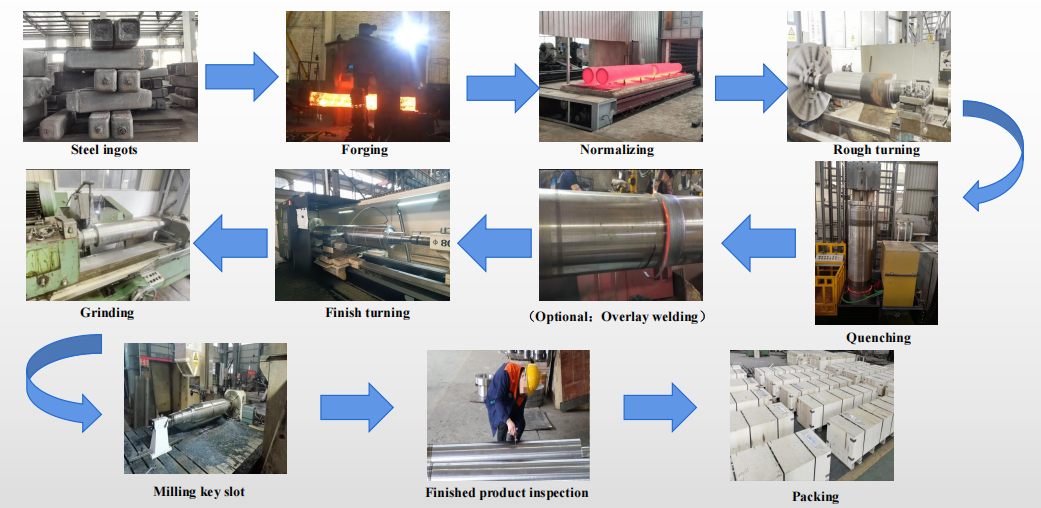
Manufacturing Process Flow
1.Refining and Electroslag Remelting
2.Three-directional forging with a large forging ratio (forging ratio ≥ 4:1) to break up eutectic carbides and refine grains;
3.Post-forging annealing / quenching and tempering to relieve forging stress;
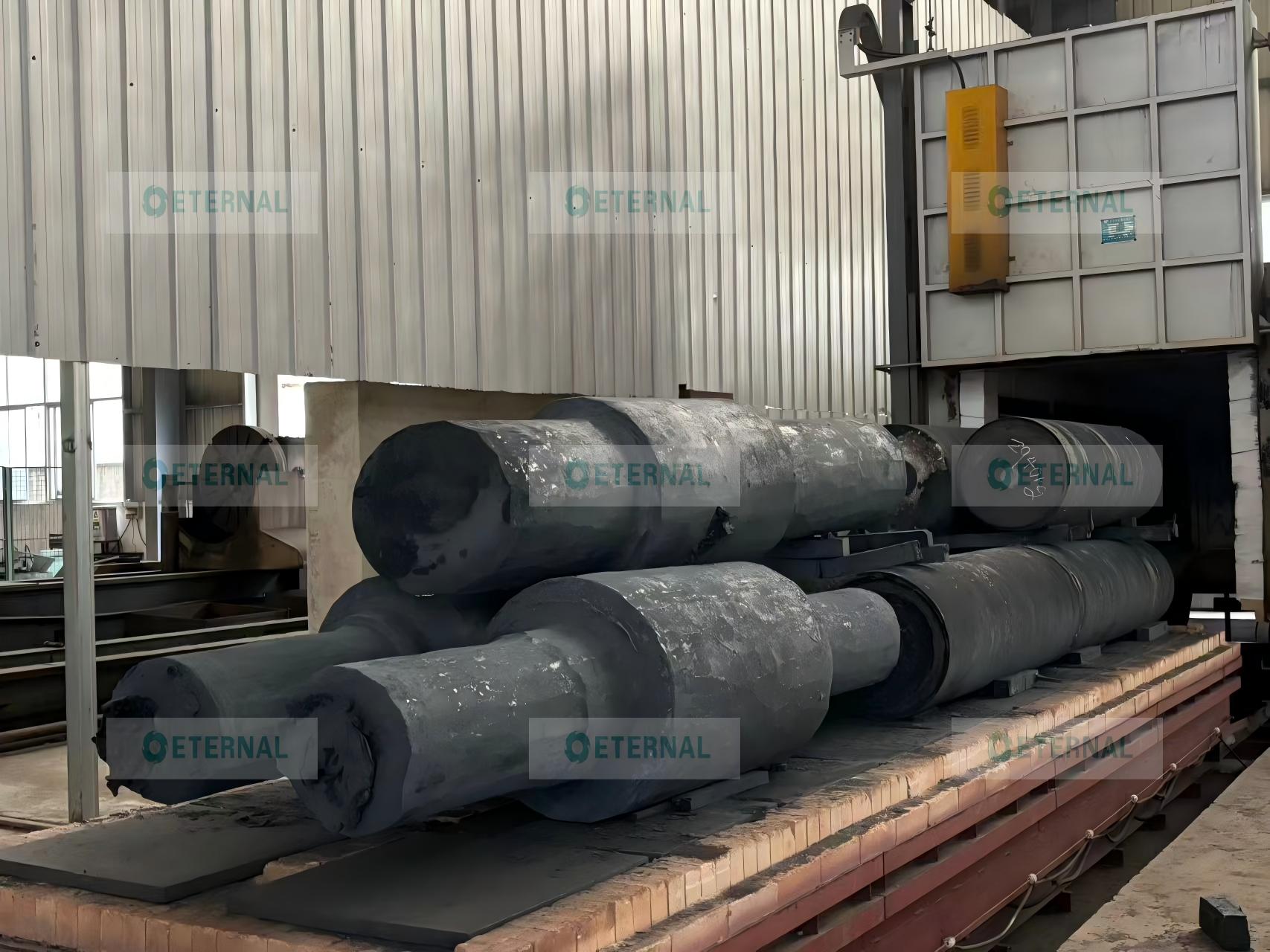
4.Medium-frequency / dual-frequency induction hardening + cryogenic treatment + tempering to achieve a uniform deep hardened layer.Roll barrel hardness is generally 92–96 HSD (approx. HRC70), with a single-side hardened layer of 30–40 mm;Roll necks remain in a tough condition with hardness 50–60 HSD;
5.Precision machining + non-destructive testing (UT/MT) to meet rolling mill installation accuracy and fatigue safety requirements.
Application
Single-stand or multi-stand tandem cold rolling mills
High-precision sheet and strip rolling
Temper mills (skin pass mills)
Other Forged Steel Cold Rolling Work Roll Steel Grade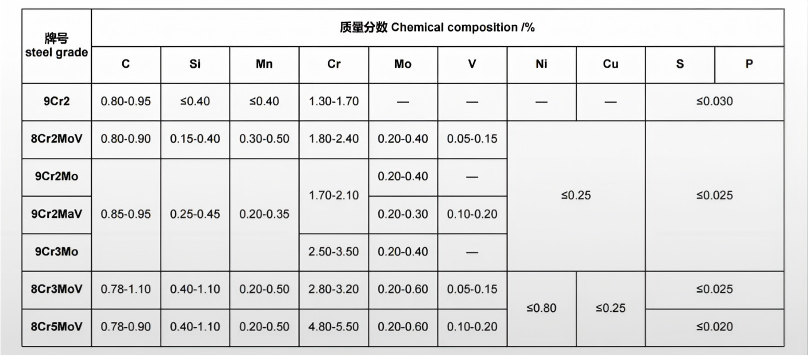
Key Points for Application and Maintenance
Strictly control rolling lubrication and cooling to prevent excessive local temperature rise.
Regularly inspect the roll surface and promptly grind micro-cracks and pits.
Avoid overloading rolling and foreign matter intrusion to prevent roll surface spalling and cracking.
Conduct non-destructive testing periodically to monitor the development of internal and surface defects.


