


Views: 100 Author: EHI Rolling Mill Technical Team Publish Time: 2026-06-28 Origin: Site


Rolls are the core forming components of rolling mills, primarily deployed in the metallurgical industry for hot and cold rolling of metals including steel, aluminum, copper and titanium to produce plates, profiles and metal foils. They are also widely adopted in new energy sectors such as lithium battery electrode sheet and copper/aluminum foil processing, as well as paper film calendering, food packaging rolling and other fields, supporting infrastructure, automotive, aerospace and electronic manufacturing industries. Different rolls are matched for rough rolling, finish rolling, back-up rolling and other processes to guarantee dimensional accuracy and surface quality of workpieces. Proper selection of roll materials together with standardized operation and maintenance can drastically reduce roll consumption, cut downtime and boost production capacity.
This paper sorts out the property characteristics, applicable scenarios, selection methods and operation specifications of mainstream roll materials, providing practical operation references for technical personnel.
Material characteristics of forged steel rolls: forged steel rolls are manufactured via high-temperature forging technology, featuring dense internal structures, refined grains and excellent comprehensive mechanical properties, with high strength, good toughness and strong resistance to thermal cracking.
Typical materials of forged steel rolls:
Materials of hot rolling forged steel rolls include 55Mn2, 55Cr, 60CrMnMo, 60SiMnMo, etc.
Materials of cold rolling forged steel work rolls include 9Cr2Mo, 9Cr3Mo, 9Cr5Mo, MC3, MC5, H13, Cr12MoV, Cr12Mo1V1 (SKD11/D2), etc.
Hardness range of forged steel rolls:
Hot rolls' hardness range is 45–60 HSD.
Cold rolling work rolls' hardness range is 85–100 HSD.
Application scenarios of forged steel rolls:forged steel rollers are applied to the scenarios,such as roughing stands and back-up rolls for hot strip mills, blooming mill rolls,high-load critical positions including cold rolling work rolls and back-up rolls,rolling processes demanding high toughness and impact resistance.
Advantages of forged steel rolls:forged steel rolls feature strong fracture resistance, making them suitable for working conditions with heavy rolling forces. They boast a long service life and low rolling cost per unit.
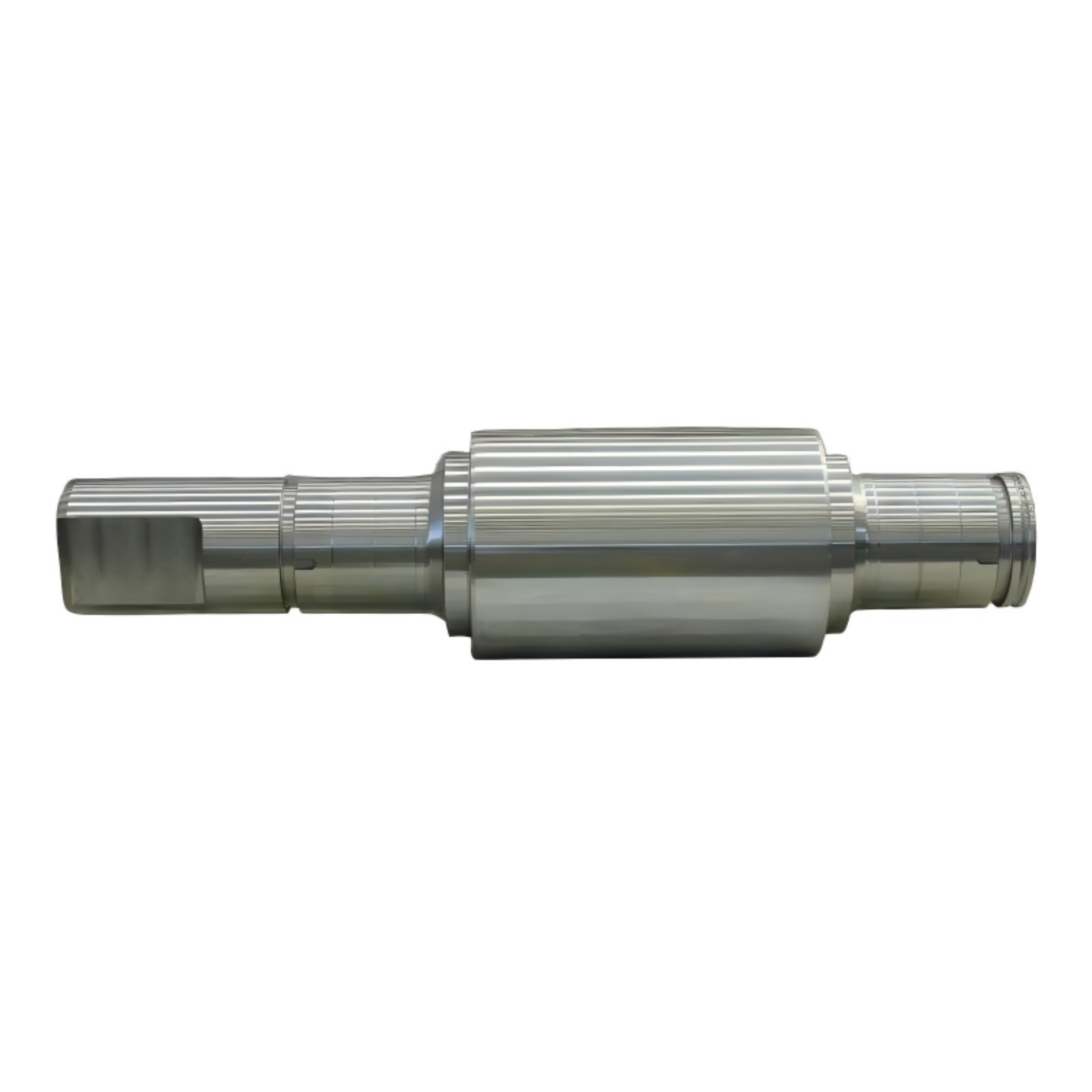


Material characteristics of alloy cast steel rolls: the raw material for alloy cast steel rolls is made of high-quality molten steel melted in an electric arc furnace, and processed through casting and heat treatment. It has high strength, good toughness, and better wear resistance than ordinary cast steel.
Typical grades of alloy cast steel rolls:cast steels alloyed with chromium, molybdenum, nickel, vanadium and other elements.
Hardness range of alloy cast steel rolls:50–70 HSD
Application scenarios of alloy cast steel rolls:alloy cast steel rolls are applied to the scenarios,such as roughing and intermediate stands for section steel rolling,roughing stands and back-up rolls for hot strip mills,working conditions requiring balanced toughness and wear resistance.
Advantages of alloy cast steel rolls:alloy cast steel rolls have the advantage of lower cost than forged steel rolls and are suitable for medium-load rolling. They feature high production efficiency and a short delivery cycle.
Material Characteristics of high-chromium cast iron rolls:high-chromium cast iron rolls are produced by centrifugal casting. The outer layer of the roll barrel is high-chromium white wear-resistant cast iron with a chromium content of 10–30%, which forms abundant hard Cr₇C₃ carbides and delivers outstanding wear resistance and oxidation resistance.
Material types of high-chromium cast iron rolls:high-chromium composite cast iron, semi-steel composite cast iron.
Hardness Range of high-chromium cast iron rolls:
Hot rolls' hardness range is 60–95 HSD.
Cold rolls' hardness range is HRC 60–65.
Application scenarios of high-chromium cast iron rolls:high-chromium cast iron rolls are applied to the scenarios,such as finishing work rolls for continuous hot strip mills,cold strip work rolls and temper rolls,rolling processes with strict requirements for product surface quality.
Advantages of high-chromium cast iron rolls:high-chromium cast iron rolls feature wear resistance 3 to 5 times that of ordinary cast iron, and deliver high surface finish to improve product quality.
Material characteristics of semi-steel rolls:semi-steel rolls have a carbon content ranging from 1.8% to 3.0%, between cast steel and cast iron. They combine the toughness of cast steel and the wear resistance of cast iron at a moderate price.
Hardness range of semi-steel rolls:55–80 HSD
Advantages of semi-steel rolls:semi-steel rolls boast high cost performance and are applicable to working conditions requiring medium load and moderate wear resistance.
| Material Type | Core Features | Applicable Scenarios |
| Ceramic rolls | High temperature wear resistance; good chemical stability; low friction coefficient | Hot rolling high temperature section; high-precision and special steel rolling |
| Cemented carbide rolls | Extremely high hardness (HRC90+); excellent wear resistance and anti-seizure property | Ultra-thin strip steel; high-precision tubes; cold drawing dies |
| High-speed steel rolls | Good red hardness; superior wear resistance and thermal fatigue resistance | Finishing stands of hot strip mills; high carbon steel rolling |
For hot rolling processes, thermal fatigue resistance and toughness are prioritized, with wear resistance taken into consideration as well.
Cold rolling processes focus on hardness and wear resistance to guarantee surface quality.
Rough rolling processes emphasize strength and impact resistance, with a certain degree of wear acceptable.
Finishing rolling processes pursue high hardness and dimensional surface accuracy while strictly controlling wear.
When rolling high-strength steel, materials with high hardness and excellent wear resistance such as high-chromium cast iron and high-speed steel shall be selected.
For rolling thin-gauge strip steel, rolls with superior surface finish such as high-chromium composite cast iron are preferred.
When rolling special steel grades, high-temperature resistant and anti-sticking materials including ceramics and cemented carbide shall be considered.
Take a comprehensive account of roll procurement cost, service cost and maintenance cost, rather than only focusing on the initial purchase price.
For critical stands under heavy load, cost-effective forged steel or high-chromium composite rolls shall be adopted to cut the rolling cost per unit.
For auxiliary stands with light load, economical alloy cast steel or semi-steel rolls can be used to control the total investment.
Roll selection is a systematic project that requires comprehensive consideration of multiple factors including rolling process, product characteristics and cost. Proper material selection combined with standardized operation and maintenance can extend roll service life by 30–50%, cut roll consumption costs by 20–30%, and greatly improve the stability of product quality.
Precision thin sheets and foils of this kind impose extremely stringent requirements on roll surface finish, hardness uniformity and dimensional accuracy. High-chromium composite cast iron rolls are the preferred option, as they feature high roll surface precision and outstanding wear resistance, which can effectively prevent scratches and defects on the surface of foils and thin strips.
For ultra-high-precision cold rolling conditions, high-hardness forged cold rolling steel rolls such as 9Cr2Mo and 9Cr3Mo can be adopted. They deliver superior stability and are applicable to the rolling and production of high-end precision metal foils and thin sheets.
The rough rolling process is subject to heavy rolling force, high impact load and frequent thermal stress. Rolls featuring high toughness, good impact resistance and thermal cracking resistance are prioritized, mainly forged steel rolls, alloy cast steel rolls and semi-steel rolls, which tolerate moderate roll surface wear.
The finishing rolling process imposes strict standards on dimensional accuracy and surface finish of rolled products, demanding rolls with high hardness, excellent wear resistance and stable roll surface precision. High-chromium cast iron rolls are the first choice for hot finishing rolling; for cold finishing rolling, high-chromium composite cast iron rolls or high-hardness forged cold rolling rolls are used to effectively secure the surface quality of finished products.


