


 |


| Quantity: | |
|---|---|
FORGE-Cold Roll Backup Roll
ETERNAL
The Forged Steel Cold-rolling Backup Roll is a key component spare part for high-precision, ultra-thin, and high-quality rolling of aluminum foil.
The core function of the backup roll in aluminum foil rolling mill is to bear rolling force, rigidly support the work roll, suppress deflection deformation, stabilize roll gap and plate shape, and protect the workroll.
Produced by ETERNAL, the backup roll adopts high-purity 9Cr3Mo steel as the base material—this alloy steel is renowned for its excellent toughness and wear resistance.Compared with Cr2 series such as 9Cr2Mo: Cr content+1%, stronger hardenability, deeper hardened layer, and better tempering stability,making it ideal for high-speed aluminum foil cold rolling mills.
Unlike ordinary rolls, it uses ESR ingot as the raw material, which significantly reduces internal defects and improves material uniformity. Adopting high-purity smelting, sufficient forging, deep induction quenching plus cryogenic treatment and ultra-precision machining to meet core requirements of high-end aluminum foil.
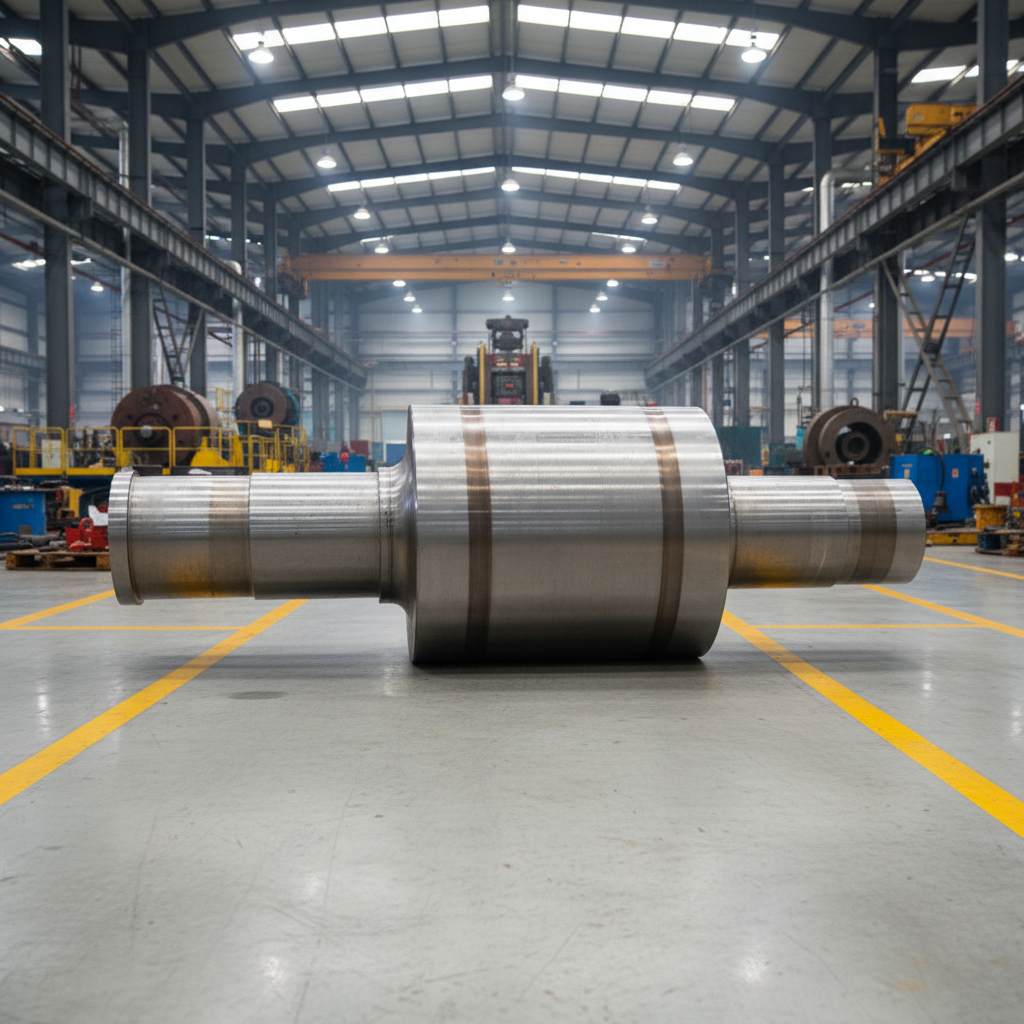
Forging:Dense internal structure, no porosity, deep hardened layer, excellent fatigue and spalling resistance, long service life. Ideal for high-end aluminum foil rolling mills.
Casting:Low cost and easy fabrication, yet prone to core porosity and inclusions, shallow hardened layer and short lifespan. Only applicable to small low-end rolling mills.
Parameter | Specification |
Brand | ETERNAL |
| Raw Material | ESR ingot |
| Material | Cr3 series steel,forged 9Cr3Mo |
| Key Alloy Elements | C:0.85–0.95%,Cr:2.8–3.2%,Mo:0.25–0.40%,S/P:≤0.025(high purity) |
Max Diameter | Up to 800mm |
| Heat Treatment | Long-time spheroidizing annealing; Oil quenching+ high-temperature tempering |
| Surface Treatment | Double-frequency quenching; cryogenic treatment; low-temperature tempering |
| Core Hardness | HB240-280 |
Surface Hardness | HRC 63–68(HS 88–95) |
| Mechanical Properties | Tensile Strength Rm: 900–1100 MPa; Yield Strength Rp0.2: 750–900 MPa; Elongation A: 8–12 %; Reduction of Area Z: 25–40 %; Impact energy KV (room temperature): 25–40 J |
| Depth of Hardened Layer | 20-35mm |
Surface Roughness (Ra) | Ra 0.2–0.4μm |
Inspection Test | 100% UT/MT according to EN 10228 series,ASTM A388M/A388、A966/A966M |
High-strength 9Cr3Mo steel: The synergistic effect of chromium (enhance hardenability) and molybdenum (resist tempering softening) makes it suitable for high-load cold rolling environments.
ESR ingot raw material: Ensures ultra-high material purity, eliminating internal inclusions that cause roll cracking.
Long-time spheroidizing annealing process: Effectively removes internal stress from forging, preventing deformation during subsequent heat treatment.
Oil quenching technology: Reduces crack risks compared to traditional water quenching, extending the roll's service life.
Double-frequency quenching: Achieves deep and uniform hardening layers, pushing surface hardness up to HRC68 for extreme wear resistance.
Cryogenic treatment: In order to obtain a deeper hardened layer, a cryogenic process is added, which can increase the hardened layer by 5mm.
Raw material smelting → Ingot forging → Spheroidizing annealing → Rough machining → Quenching and tempering → Roll body induction quenching & cryogenic tempering → Finish machining & mirror grinding → Non-destructive testing → Performance inspection → Packaging and delivery
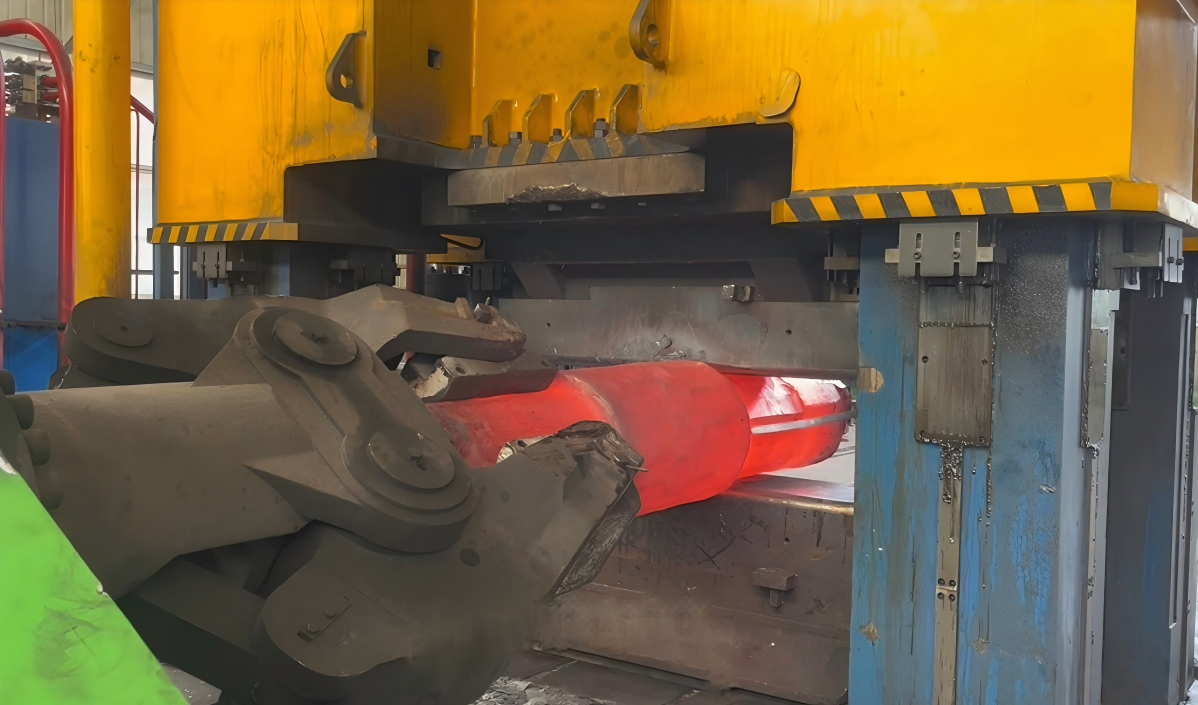
Forging: upsetting → elongation → finishing; repeatedly forging and hitting;forging ratio≥3.
Spheroidizing annealing: uniform microstructure for easy machining.
Quenching and tempering : neck/core hardness 240–280HB, high toughness and fracture resistance.
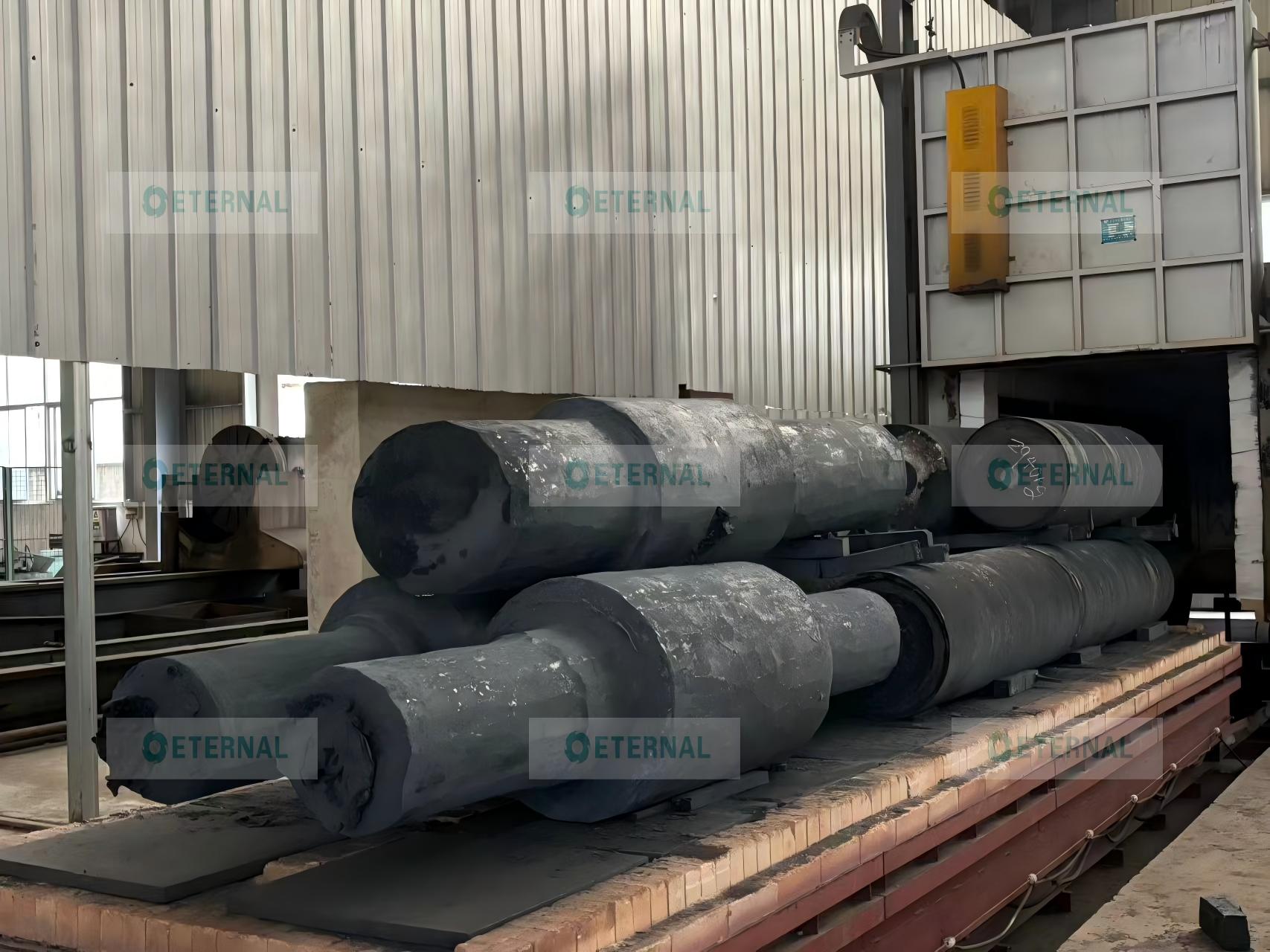
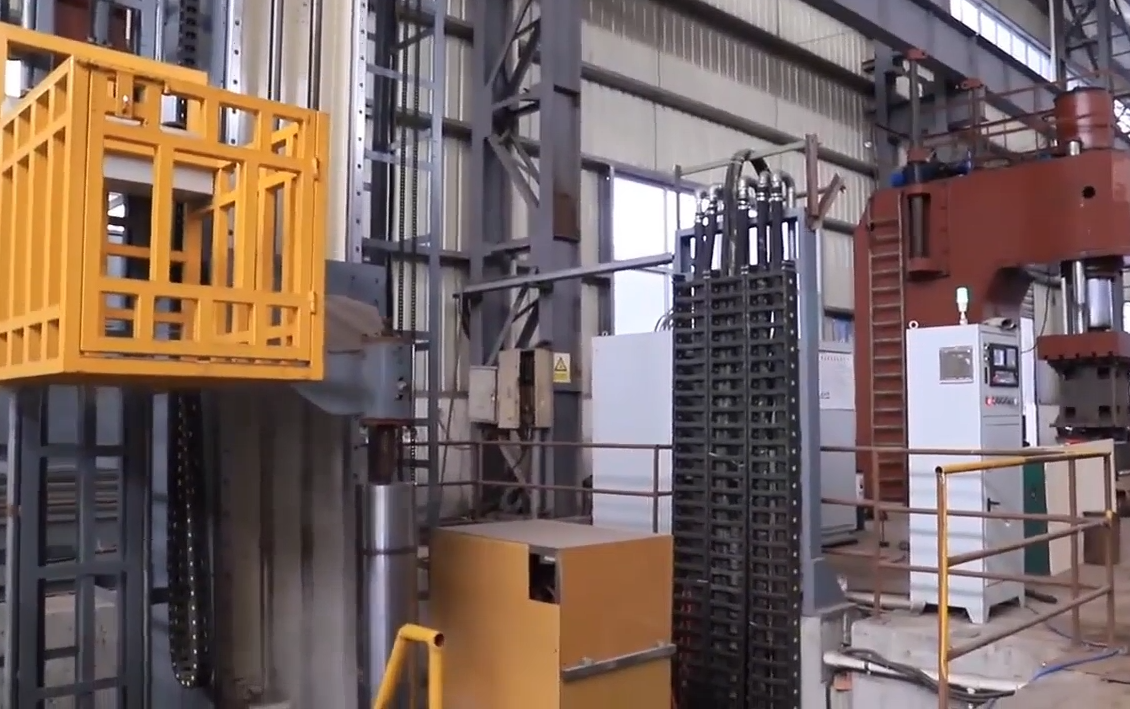
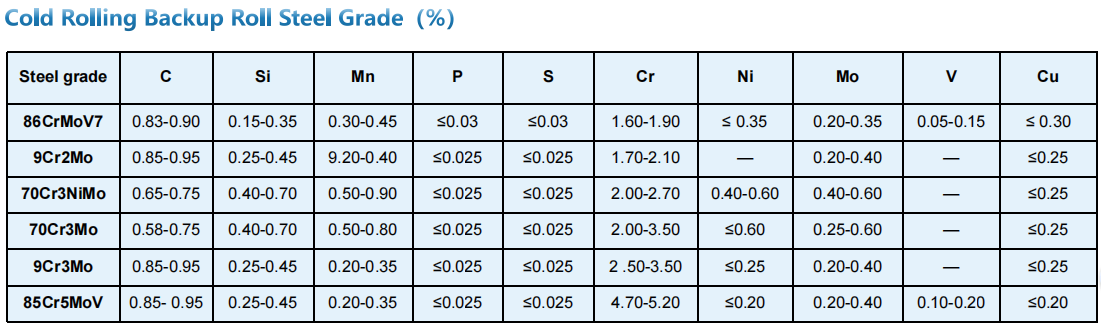
The other mainstream forged materials used for cold rolling backup rolls includes Cr2 series,Cr3 series,Cr5 series,such as 86CrMoV7/ 9Cr2Mo/ 9Cr3Mo/ MC3 / 70Cr3Mo/ 70Cr3NiMo/ MC5/ 8Cr5MoV/ 9Cr5MoV/ 9Cr5Mo ,etc.
The forging Steel Cold-rolling Backup Roll is widely applied in:
Steel plate cold rolling mills: Producing cold-rolled stainless steel/ carbon steel for automotive bodies, home appliances, and construction materials.
Aluminum plate cold rolling mills: Processing thin aluminum sheets for packaging, electronics, and aerospace components.
Copper plate/foil cold rolling mills: Manufacturing high-conductivity copper sheets/foils for electrical cables and industrial machinery.
Battery electrode rolling lines: Its ultra-smooth surface (Ra ≤ 0.4μm) ensures consistent electrode thickness, critical for lithium-ion battery performance.
Precision metal strip rolling: Handling stainless steel strips and special alloy strips that require strict dimensional accuracy.
Double-frequency quenching creates a high-hardness surface layer (up to HRC68) and sufficient hardening depth, ensuring the roll resists wear during long-term rolling while the core remains tough to avoid breakage.
Yes. The chromium content (2.50%-3.50%) in 9Cr3Mo steel provides basic corrosion resistance, and optional chrome plating can further enhance protection for harsh corrosive environments.


