


Views: 88 Author: Site Editor Publish Time: 2026-05-21 Origin: Site


Cold Rolling Mill Rolls are essential in metal strip production because they affect thickness accuracy, surface finish, flatness, tolerance control, and rolling stability. In cold rolling, these rolls must withstand repeated stress, friction, heat, and strict surface quality requirements. Their performance depends on material selection, forming route, heat treatment, machining, grinding, and maintenance. This article reviews their functions, materials, manufacturing, applications, selection, maintenance, and future trends.
● Cold Rolling Mill Rolls directly affect strip quality and rolling stability.
● Material choice influences hardness, wear resistance, fatigue strength, and roll life.
● Forged rolls are valued for structural integrity and reliable performance.
● Quenching and tempering are critical for balancing hardness and toughness.
● Different mill positions require different rolls, such as work rolls, backup rolls, and intermediate rolls.
● Proper grinding, inspection, storage, and reconditioning extend service life.
● Applications vary across carbon steel, stainless steel, aluminum, copper, and precision strip processing.
Cold Rolling Mill Rolls are precision cylindrical tools used to reduce strip thickness, improve surface finish, and control strip shape. Because cold rolling occurs below recrystallization temperature, these rolls need high hardness, surface smoothness, dimensional stability, and strong wear resistance.
They are more than rotating parts. Cold Rolling Mill Rolls affect metallurgical consistency, rolling force distribution, shape control, and vibration stability. Even small surface changes can transfer to the strip and affect downstream processing.
Cold Rolling Mill Rolls differ from hot rolling rolls because cold rolling requires finer surface quality, tighter tolerances, and more precise dimensional control. Their surface and hardness requirements are therefore much stricter.
They also face higher contact stress with less thermal softening, which increases the risk of spalling, cracking, and fatigue. In addition, surface defect tolerance is much lower because defects may remain visible on the finished strip.
Roll condition directly affects strip quality. Surface roughness and wear can influence thickness control, shape consistency, and visible surface marks.
They also affect efficiency and cost. Rolls that wear quickly need more grinding and replacement, reducing uptime and increasing maintenance cost. For this reason, they are evaluated not only by purchase price, but also by durability, regrind life, and overall impact on yield and scrap.
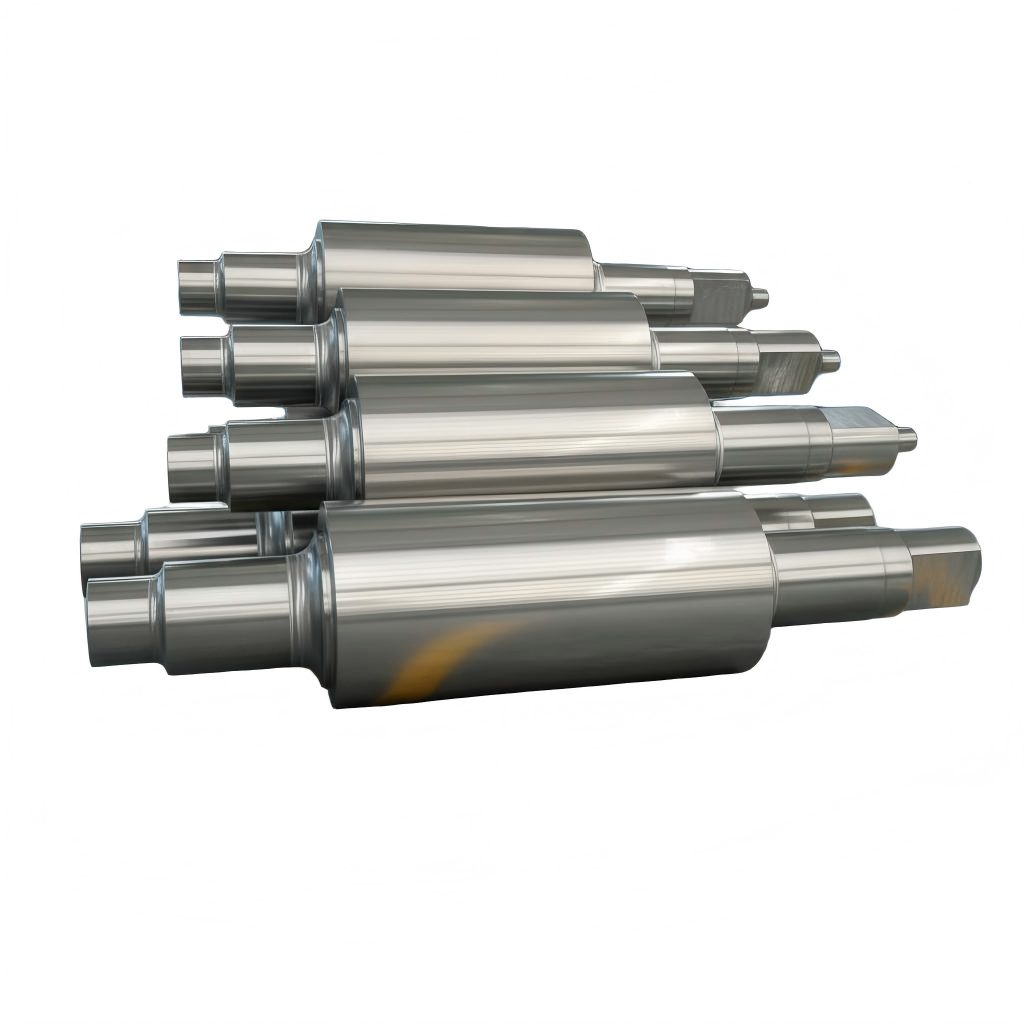
Cold Rolling Mill Rolls apply compressive force to a strip as it passes through the roll gap. The strip deforms plastically between the rotating rolls, with thickness reduction achieved through pressure, friction, and speed coordination.
Because the contact area is small but the force is high, the rolls experience intense localized stress. Uneven pressure can cause flatness defects, edge problems, and irregular wear, so roll geometry and crown design must match mill conditions.
Surface condition also matters. Rolls may be polished or textured to achieve brightness, controlled roughness, or coating performance.
The precision of Cold Rolling Mill Rolls is critical for thickness control. Even small variations in diameter or profile can affect strip gauge over long lengths, especially in products with tight tolerances.
Surface finish depends heavily on roll quality. A stable roll surface improves appearance and reduces roll marks, chatter, and uneven texture. Rolls also affect lubrication behavior, which influences friction, heat, and wear.
Different rolls serve different functions. Work rolls directly contact the strip and need excellent surface quality and wear resistance. Backup rolls support the work rolls and must provide high strength, stiffness, and fatigue resistance.
Intermediate rolls, used in some mill types, improve shape control and load distribution. Because each position faces different stress conditions, roll design must be adapted accordingly.
Forged alloy steel is one of the most common materials for Cold Rolling Mill Rolls, especially where strength, toughness, and structural integrity are important. Forged rolls usually have a more uniform internal structure, which improves fatigue resistance and reduces failure risk.
The forging process refines grain flow and reduces internal defects, making these rolls suitable for demanding work roll and backup roll applications. Their properties can also be adjusted through heat treatment.
Some rolls are made from cast iron or high-chromium materials where wear resistance is the priority. These grades can provide good surface hardness, but their suitability depends on load and impact conditions.
High-speed steel is increasingly used for advanced rolls because it offers strong wear resistance and good thermal stability. However, material selection must balance hardness, fatigue resistance, and toughness rather than focusing on hardness alone.
Material Type | Strengths | Limitations | Common Use |
Forged Alloy Steel | High toughness, good fatigue strength | Requires precise heat treatment | Work rolls, backup rolls |
Cast Iron / High Chromium | Strong wear resistance | Lower toughness in some conditions | Selected work rolls |
High-Speed Steel | Excellent wear resistance | Higher cost and processing complexity | High-demand work rolls |
Composite or Special Grades | Tailored performance | More complex design and manufacturing | Specialized rolls |
The manufacturing route begins with forging, casting, or composite production. Forging is preferred when structural soundness and fatigue resistance are critical, especially for backup rolls and premium rolls.
Casting is still used for some rolls where wear-resistant microstructures are needed. However, it requires strong process control to avoid segregation and porosity. The route should be chosen based on application needs, not convenience.
Heat treatment is one of the most important steps in roll production. It determines hardness, stress balance, and toughness. Without proper treatment, even high-quality material cannot perform reliably.
Quenching increases hardness, while tempering reduces brittleness and improves toughness. These steps must be carefully controlled to avoid residual stress and cracking.
After heat treatment, rolls are precision machined to achieve the required dimensions and geometry. This includes diameter tolerance, concentricity, barrel profile, and journal accuracy.
Grinding creates the final working surface, so surface defects must be strictly controlled. Final finishing may include polishing or texturing depending on the intended application.
Work rolls directly contact the strip, so they have the greatest impact on surface quality and gauge accuracy. They require excellent surface finish, hardness, and wear resistance.
In demanding mills, their performance determines campaign length. If they lose profile or develop defects too early, strip quality declines quickly. They are widely used in carbon steel, stainless steel, aluminum, and precision strip production.
Backup rolls support the work rolls and carry heavy force. Although they do not directly shape the strip, they are essential for rigidity and shape control.
They need high strength, deep hardness, and fatigue resistance because they face repeated cyclic loading. Forged construction is often preferred for these rolls.
Intermediate rolls are used in multi-high mills to improve shape control and load distribution. Special function rolls may include guide rolls, bridle rolls, or rolls for narrow-strip and precision applications.
As rolling mills become more specialized, the demand for application-specific roll designs continues to increase.
The first step is to identify the strip material. Carbon steel, stainless steel, aluminum, copper, and coated substrates each create different wear and surface demands.
Harder or more abrasive materials require stronger wear resistance, while appearance-sensitive products need better surface stability and polishability. Production mix also matters if the mill handles multiple grades.
Mill configuration affects roll requirements. 4-high, 6-high, and cluster mills place different demands on work rolls, backup rolls, and intermediate rolls.
Rolling speed, reduction schedule, lubrication, and strip width also influence roll selection. The chosen roll must also match the plant’s grinding and maintenance capability.
Purchase price alone does not define the most economical choice. A cheaper roll may require more regrinding, more downtime, and higher overall cost.
Regrind life is especially important. The best Cold Rolling Mill Rolls combine suitable metallurgy, reliable heat treatment, stable wear behavior, and compatibility with plant maintenance standards.
Cold Rolling Mill Rolls are widely used in carbon steel strip production, where thickness precision and surface consistency are critical. They must balance wear resistance and toughness for long campaigns.
In stainless steel rolling, surface requirements are even stricter. Marks and scratches can directly affect appearance and usability, so roll surface quality must be carefully controlled.
Cold Rolling Mill Rolls are also important in non-ferrous strip production. Aluminum rolling requires smooth surface transfer and dimensional consistency, while copper rolling needs stable contact behavior and low defect transfer.
As non-ferrous products expand in electrical and packaging sectors, the technical demand on rolls continues to grow.
Precision strip applications require high dimensional accuracy, surface integrity, and predictable wear behavior. Small roll deviations can directly affect product usability.
These applications demand stable performance over multiple campaigns, making material quality, heat treatment, and grinding especially important.
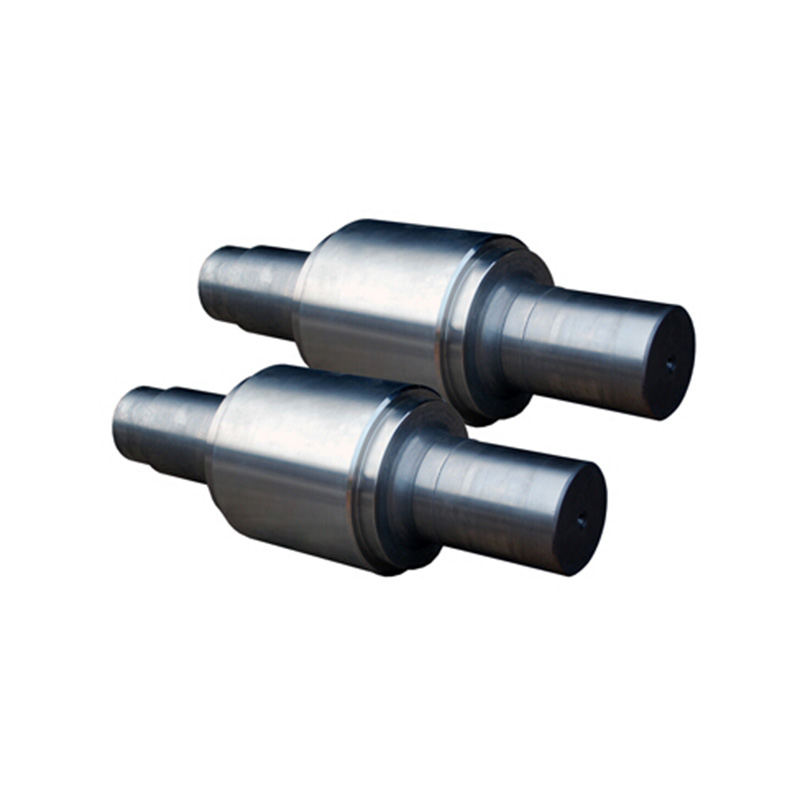
The future of Cold Rolling Mill Rolls is tied to advanced metallurgy, cleaner steel, and better microstructural control. These improvements support stronger combinations of hardness and toughness.
Surface engineering is also advancing through improved texturing and hard-layer treatments, which can extend campaign life and improve strip repeatability.
Digital monitoring is changing how rolls are managed. Roll history, wear patterns, grinding records, and campaign results can now be tracked more accurately.
This helps optimize regrind intervals, inventory planning, and failure prevention. Data does not replace metallurgy, but it improves roll management efficiency.
Future roll development will also be shaped by sustainability. Longer service life reduces raw material use, replacements, and downtime-related energy waste.
At the same time, mills need higher productivity and tighter specifications. The next generation of rolls will be defined by durability, precision, and process control.
Cold Rolling Mill Rolls are essential for thickness accuracy, surface finish, strip flatness, and stable mill operation. Their performance depends on material selection, heat treatment, machining, grinding, and maintenance. The right rolls can improve quality, reduce downtime, and lower total operating cost.
Jiangyin Eternal Heavy Industry Co.,Ltd. offers advantages in material control, forging, heat treatment, precision machining, and customization for different rolling mill roll applications. With stable quality and technical experience, the company is well positioned to supply durable and application-matched Cold Rolling Mill Rolls.
Common materials include forged alloy steel, cast iron, high-chromium materials, and high-speed steel. The choice depends on whether the priority is toughness, wear resistance, fatigue strength, or regrind life.
Heat treatment determines hardness, residual stress, and toughness. Proper quenching and tempering help balance wear resistance and crack resistance.
Work rolls directly contact the strip and have the greatest impact on surface finish and gauge accuracy. Backup rolls support the work rolls and provide strength and fatigue resistance under heavy load.


