


Views: 0 Author: Site Editor Publish Time: 2026-09-25 Origin: Site


Raise boring operations push mechanical engineering to its absolute limits. During the upward reaming phase, the drill string endures simultaneous high-tension loads, severe torsion, and cyclic bending stresses. A single failure in this extreme environment leads to catastrophic consequences. Dropped reamers, abandoned shafts, and massive project delays present severe safety hazards and operational setbacks. Selecting the right equipment is a strict engineering decision, not a simple commodity purchase. This guide provides a rigorous, evidence-based framework for evaluating metallurgy, thread geometry, dimensional specifications, environmental factors, and manufacturing quality when sourcing a raise boring drill pipe. You will learn how to match material grades to shaft depth, analyze thread designs for fatigue resistance, and vet suppliers for essential quality assurance protocols.
Metallurgy Dictates Depth: The choice between standard alloys and high-strength variants (like 4330V) directly impacts the maximum safe shaft depth and fatigue life.
Thread Geometry is the Weak Link: Radiused root thread designs are non-negotiable for mitigating stress concentrations and preventing premature fatigue failure.
Environmental and Profile Matching: Site-specific variables—including ambient temperature, hydrostatic pressure, and whether the shaft is vertical or inclined—must dictate the final pipe specifications.
Manufacturing Transparency is Mandatory: A reliable raise boring drill pipe manufacturer must provide comprehensive traceability, including full-length heat treatment records and rigorous Non-Destructive Testing (NDT) documentation.
System Compatibility: Drill pipe specifications must align perfectly with rig hoisting capacity, automated handling systems, and the broader assembly of raise boring tools.
Raise boring involves a unique dual-phase stress profile that demands exceptional mechanical resilience from every component in the string. The operation begins with the pilot hole drilling phase. Here, the tricone bit pushes downward through the rock formation, placing the drill string under continuous compressive stress. The bailing fluid flushes cuttings up the annulus, requiring specific internal diameter clearances. However, the real mechanical test begins during the upward reaming phase. The rig pulls the massive reamer head upwards, subjecting the steel to extreme tensile and torsional stress simultaneously. The torque required to rotate a large-diameter reamer against solid rock is immense, and the pipe must transmit this rotational force from the drive head all the way down the shaft without twisting off.
Cyclic fatigue acts as the primary enemy of the drill string during this phase. In perfectly vertical shafts, the stress remains relatively axial. The load distributes evenly across the cross-section of the pipe. Inclined or directional well profiles completely change this dynamic. As the pipe rotates through a curve, the steel bends back and forth with every single revolution. This constant flexing exponentially accelerates fatigue. We can categorize the primary stress factors into four distinct forces:
Compressive Stress: Dominates the initial pilot hole drilling as weight is applied to the bit.
Tensile Stress: Peaks during the upward reaming phase, supporting the weight of the string and the reamer.
Torsional Stress: Generated by the rotational force required to fracture and cut the rock face.
Cyclic Bending Stress: Amplified in inclined shafts, causing rapid fatigue crack initiation if not managed.
Shaft depth and diameter dictate the baseline requirements for your equipment. Depths reaching up to 2,000 meters exponentially increase the dead weight hanging from the top-drive connections. Adding the dynamic loads generated by the reaming action requires exceptional tensile strength to prevent the string from pulling apart. You must calculate the total hanging weight and compare it against the yield strength of the pipe body and the tool joints. Geological formations also play a major role in equipment selection. High Unconfined Compressive Strength (UCS) rock demands significantly higher torque to cut, increasing torsional strain and subsequent wear on the connections.
Abrasive rock types will rapidly degrade the outer diameter of the pipe, reducing its structural integrity over time. Environmental extremes further influence material selection. Extreme ambient temperatures affect steel brittleness, making impact toughness a critical metric in cold environments. Subterranean pressure alters fluid dynamics and cooling efficiency, requiring careful consideration of internal flow capacities. The table below illustrates how different rock hardness levels impact operational demands.
Rock Type | Typical UCS Range (MPa) | Torsional Demand | Pipe Wear Rate |
|---|---|---|---|
Soft Sedimentary (Shale, Soft Limestone) | 20 - 50 | Low to Moderate | Low |
Medium Hard (Sandstone, Hard Limestone) | 50 - 120 | Moderate to High | Moderate |
Hard Igneous/Metamorphic (Granite, Basalt) | 120 - 200+ | Extreme | High |
Highly Abrasive (Quartzite) | 150 - 250+ | Extreme | Severe |
AISI 4145H modified steel serves as the baseline for many drilling applications across the industry. It offers a solid balance of hardness, yield strength, and ductility. A 4145H raise boring drill pipe performs exceptionally well in shallow to medium-depth shafts. It handles standard rock formations efficiently, providing a reliable backbone for conventional projects. The chemical composition relies on chromium and molybdenum to provide adequate hardenability for standard operations. This ensures the pipe can withstand routine torsional and tensile loads without permanent deformation.
When project parameters remain within normal limits, this grade provides reliable performance. The typical yield strength for 4145H modified steel ranges around 110,000 to 120,000 psi, depending on the exact heat treatment parameters. This provides ample overhead for standard reaming operations where the hanging weight does not approach the extreme limits of the rig's capacity. However, pushing 4145H beyond its intended depth or into ultra-hard rock formations risks exceeding its endurance limit, leading to rapid fatigue failure.
Deep shafts and large-diameter reaming demand superior metallurgy that pushes beyond standard capabilities. The 4330V alloy (Nickel-Chromium-Molybdenum-Vanadium) delivers exceptional hardenability and impact toughness. The addition of nickel significantly improves the alloy's toughness, allowing it to absorb heavy shock loads without fracturing. Vanadium refines the grain structure of the steel during the forging and heat treatment process, drastically boosting fatigue resistance. A 4330V raise boring drill pipe becomes an operational necessity when depths exceed the safe working load of 4145H.
The superior yield strength, often exceeding 130,000 to 150,000 psi, supports massive hanging weights. This prevents catastrophic string separation during deep-shaft reaming. This high-strength alloy ensures the drill string can endure the extreme dynamic loads generated when cutting through ultra-hard rock formations at extreme depths. The refined grain structure also slows the propagation of microscopic fatigue cracks, providing a wider safety margin and longer operational lifespan in harsh environments.
Raw material grade means nothing without precise thermal processing. Full-length quench and temper processes are critical for achieving uniform mechanical properties across the entire length of the pipe. Proper heat treatment ensures the steel reaches its target yield strength while maintaining the necessary ductility to absorb impact loads. The process begins with austenitizing the steel, heating it to a specific temperature to alter its crystalline structure. It is then rapidly quenched in a controlled fluid bath, usually oil or water, to lock in the hardness.
The quenching process hardens the steel, but leaves it brittle. The subsequent tempering process reheats the steel to a lower temperature, relieving internal stresses and restoring toughness. Improper thermal management leaves brittle zones or soft spots within the steel matrix. These inconsistencies create weak points where fatigue cracks easily initiate, rendering the high-grade alloy useless under heavy loads. Consistent, verifiable heat treatment is the only way to guarantee the steel will perform to its theoretical limits in the field.
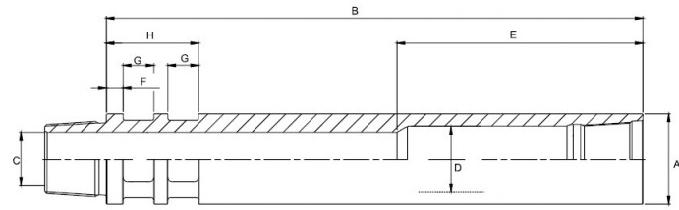
Standard flat root threads, common in conventional oilfield pipe, fail rapidly in raise boring applications. The sharp corners of a flat root concentrate stress, acting as initiation points for fatigue cracks under heavy loads. When the pipe bends or stretches, the mechanical forces focus entirely on these sharp geometric transitions. Radiused root threads are absolutely essential for upward reaming. A smooth, rounded root distributes stress evenly across the entire thread profile. This simple geometric change drastically reduces stress concentrations, extending the fatigue life of the connection under high-tension cyclic loading.
The radiused design ensures the bending and tensile forces do not focus on a single microscopic point. This prevents the rapid propagation of fractures that lead to twist-offs. Engineering teams spend significant time analyzing thread profiles using finite element analysis (FEA) to optimize the radius curvature. The goal is to maximize the load-bearing surface area while eliminating any sharp angles that could serve as a catalyst for mechanical failure during the reaming phase.
Proper shoulder engagement prevents thread galling and keeps the connection from backing out during high-torque reaming. The rotary shoulder connection must be made up to the exact specified torque to create a rigid, unified seal. When the shoulders engage correctly, they share the bending and tensile loads with the threads, creating a highly stable joint. If the make-up torque is too low, the connection will flex during operation, leading to rapid thread wear and eventual failure. If the torque is too high, the pin can yield, permanently damaging the connection.
Thread surface treatments improve anti-galling properties and enhance fatigue life. Cold rolling the thread roots compresses the steel, adding residual compressive stress that actively fights fatigue crack initiation. As the pipe bends, the applied tensile stress must first overcome this residual compressive stress before it can begin to tear the steel apart. Copper plating or phosphating adds a protective layer that provides essential lubrication. This prevents metal-to-metal galling during repeated make-up and break-out cycles on the rig floor.

Standard size ranges typically span from 5 3/4" O.D. up to 15" O.D., depending on the specific application. The chosen diameter must correlate directly with rig specifications and pilot hole dimensions to ensure proper clearance and fluid flow. Wall thickness determines the internal diameter (I.D.), which dictates bailing fluid flow rates necessary for clearing cuttings. Thicker walls increase overall tensile capacity but add significant dead weight to the string. You must calculate the total string weight accurately.
The combined dead weight of the pipe and the dynamic reaming loads must never exceed the rig's safe hoisting capacity. Overloading the rig leads to severe mechanical failures, stalled operations, and extreme safety hazards. The table below outlines hypothetical standard dimensions and their impact on string weight.
Outer Diameter (O.D.) | Internal Diameter (I.D.) | Approximate Weight per Meter (kg/m) | Typical Application |
|---|---|---|---|
8" (203 mm) | 5" (127 mm) | 150 - 170 | Medium depth, standard reaming |
10" (254 mm) | 6" (152 mm) | 240 - 270 | Deep shafts, large diameter reaming |
11-1/4" (286 mm) | 6-1/4" (159 mm) | 320 - 350 | Ultra-deep shafts, extreme loads |
Modern rigs rely heavily on automated drill pipe feeders and wrenching systems to improve efficiency and safety. The pipe must feature exact dimensional tolerances for seamless integration with these automated handling systems. Variations in tool joint diameter, slip groove placement, or overall length cause handling errors, dropped pipes, and significant rig downtime. The automated wrenches require precise gripping surfaces to apply the massive make-up torque without crushing the pipe body.
Furthermore, strict compatibility is required between the drill pipe and the broader assembly of raise boring tools. Stabilizers, stems, and the reaming head must all share matching thread profiles, outer diameters, and torque capacities. If a stabilizer has a different thread pitch or a lower yield strength than the main drill string, it becomes an immediate bottleneck and a severe safety risk. The entire string must function as a unified, vibration-free system during operation.
A reputable raise boring drill pipe manufacturer implements rigorous, non-negotiable NDT protocols to guarantee product integrity. Ultrasonic Testing (UT) scans for internal flaws, voids, or inclusions hidden deep within the steel matrix. These internal defects act as stress multipliers, causing the pipe to snap under tension without any visible warning signs. Magnetic Particle Inspection (MPI) detects microscopic surface cracks, particularly around the highly stressed thread roots. MPI involves magnetizing the steel and applying iron particles, which cluster around any surface discontinuities.
Hardness testing verifies the success and uniformity of the heat treatment process. Technicians take hardness readings at multiple points along the pipe to ensure the quench and temper cycle penetrated the steel evenly. Always request Material Test Reports (MTRs) before accepting delivery. These documents provide full traceability, proving the exact chemical composition and mechanical properties from the original steel mill pour to the finished, machined product.
Thread precision dictates connection longevity and overall string reliability. Assess the manufacturer's CNC machining capabilities carefully. High-precision lathes ensure thread pitch, taper, and lead meet exact engineering specifications. This level of precision is especially critical when you require a custom raise boring drill pipe tailored to non-standard rig configurations or proprietary thread profiles. The machining process must account for the slight deformation that occurs when the threads are cold-rolled.
Tight machining tolerances guarantee proper shoulder engagement, optimal stress distribution, and a connection that will not leak or fail under extreme torsional loads. Poor machining leads to uneven load distribution. If the threads do not mate perfectly, the stress concentrates on a few individual thread crests rather than spreading across the entire connection. This causes rapid thread wear, galling, and inevitable downhole failures.
Pre-operational damage frequently compromises drill strings before they even enter the shaft. Thread impacts during loading, unloading, or transit create immediate stress risers that will fail under load. A forklift tine striking an unprotected thread can ruin a pipe instantly. Corrosion during storage degrades the surface integrity, pitting the steel and creating microscopic weak points. Rust in the thread roots acts exactly like a sharp geometric cut, accelerating fatigue failure.
Implement strict mitigation strategies to protect your equipment. Use heavy-duty cast steel or high-density plastic thread protectors at all times, ensuring they are fully threaded and secure. Ensure proper dunnage separates the pipes during transport to prevent metal-to-metal impacts and friction wear. Apply high-quality anti-corrosion compounds to all machined surfaces before placing the equipment into long-term storage. Keep the pipes elevated off the ground to prevent moisture accumulation.
Routine inspections between bores are critical for preventing downhole failures and extending equipment life. Establish a strict framework for visual and NDT inspections after every major project. Clean all threads thoroughly using specialized solvents and inspect for galling, stretching, or fatigue cracks using MPI. Pay close attention to the pin base and the box counterbore, as these areas experience the highest bending stresses.
Define clear, uncompromising criteria for retiring a raise boring drill rod. Common retirement triggers include thread wear exceeding manufacturer limits, reaching maximum cumulative fatigue cycles based on operational history, or a measurable reduction in the outer diameter due to abrasive rock contact. Proactive retirement prevents catastrophic failures that cost exponentially more than replacement steel. Track the operational hours and stress loads for every individual pipe in your inventory.
Audit your current drill string inventory to identify aging connections and measure outer diameter wear against manufacturer limits.
Request detailed Material Test Reports (MTRs) and NDT documentation from all prospective suppliers before finalizing any equipment orders.
Calculate your maximum anticipated dynamic loads and verify they fall safely within your rig's hoisting capacity.
Implement a strict post-bore inspection protocol utilizing Magnetic Particle Inspection (MPI) on all thread roots to catch fatigue cracks early.
A: A raise boring rod is engineered specifically for high-tension upward reaming. It features radiused root threads to mitigate extreme stress concentrations and prevent fatigue failure. Standard oilfield drill pipe is designed primarily for downward compression and rotation, utilizing flat root threads that cannot withstand the massive tensile loads of raise boring.
A: The 4330V alloy contains vanadium, which refines the grain structure and significantly increases yield strength and impact toughness. This superior fatigue resistance supports the massive hanging weight of large-diameter reamers in deep shafts up to 2,000 meters, preventing catastrophic string separation where standard alloys would fail.
A: Inclined or directional shafts introduce continuous cyclic bending stresses, exponentially accelerating fatigue. Extreme ambient temperatures can increase steel brittleness, while high hydrostatic pressure affects fluid dynamics. You must match the steel grade and thread design to these specific environmental extremes to ensure operational safety and longevity.
A: Radiused root threads feature a smooth, rounded profile at the base of the thread. This geometry evenly distributes the massive tensile and bending stresses generated during upward reaming. Flat root threads concentrate stress in sharp corners, leading to rapid fatigue crack initiation and premature connection failure.
A: You should demand Ultrasonic Testing (UT) to detect internal voids or inclusions within the steel. Magnetic Particle Inspection (MPI) is necessary to find microscopic surface cracks, particularly on the threads. Hardness testing ensures the heat treatment was successful. Always require full Material Test Reports (MTRs) for complete traceability.
A: Thread galling occurs when metal surfaces fuse together due to extreme friction and pressure during make-up or high-torque reaming. Inadequate lubrication, improper shoulder engagement, or failing to apply the correct make-up torque are the primary causes. Surface treatments like copper plating help prevent this issue.


