


Views: 0 Author: Site Editor Publish Time: 2026-09-23 Origin: Site


In high-speed cold reduction mills, operational limits depend heavily on the wear resistance, surface retention, and fatigue life of the roll material. Mill operators face a constant trade-off between initial roll procurement and the frequency of unplanned roll changes caused by surface degradation, micro-cracking, spalling, or thermal fatigue. Upgrading from the industry-standard 9Cr2Mo to the higher-alloyed 9Cr3Mo fundamentally alters the metallurgical behavior and lifecycle of the roll. This guide breaks down the technical performance changes between 9Cr2Mo vs 9Cr3Mo forged rolls to help engineering and procurement teams align material selection with specific mill demands and strip quality requirements. We will examine the chemical composition variances, depth of hardening, and field application mapping to ensure your rolling operations maintain maximum uptime and product consistency.
Metallurgical Shift: The primary distinction is the increased Molybdenum content in 9Cr3Mo (approx. 3% vs. 2%), which significantly enhances deep hardenability, carbide density, and secondary hardening during heat treatment.
Performance Gain: 9Cr3Mo delivers superior resistance to thermal shock, delayed spalling, and contact fatigue, extending the campaign length in severe-duty applications while maintaining critical surface roughness (Ra) targets.
Lifecycle Value: While a 9Cr2Mo forged steel roll is highly cost-effective for standard cold rolling, 9Cr3Mo offers a deeper usable hardened layer (maintaining 90-95 Shore C deeper into the core), allowing for more regrind cycles and lowering the long-term cost per rolled ton.
Application Fit: 9Cr2Mo remains the baseline for standard work rolls; 9Cr3Mo is structurally required for high-reduction mills, harder strip materials, or when specifying a high-durability forged steel work roll or backup roll.
Both 9Cr2Mo and 9Cr3Mo share a robust high-carbon, high-chromium foundation. The baseline 9% Chromium content provides the primary mechanism for deep hardening and oxidation resistance. During the initial electric arc furnace melting and subsequent ladle refining processes, this chromium interacts with carbon to form primary carbides. The most notable of these are M7C3 type carbides. These carbides are exceptionally hard, often reaching 1500 to 1800 HV, and provide the baseline wear resistance required for cold reduction.
The carbon content in both grades is strictly controlled, typically falling between 0.85% and 0.95%. This specific carbon range ensures sufficient hardness after quenching without rendering the steel excessively brittle. If carbon levels exceed this threshold, massive continuous carbide networks can form along the grain boundaries, drastically reducing the impact toughness of the roll. Trace elements such as Vanadium (V) and Nickel (Ni) are also present in controlled amounts. Vanadium acts as a strong carbide former, creating fine, dispersed MC-type carbides that restrict grain growth during high-temperature austenitizing. Nickel enhances the overall fracture toughness of the martensitic matrix.
The critical variance between these two grades lies entirely in the Molybdenum (Mo) concentration. Moving from approximately 2% Mo in 9Cr2Mo to roughly 3% Mo in 9Cr3Mo triggers a cascade of metallurgical changes that fundamentally alter how the roll behaves under extreme mechanical stress. This single percentage point difference dictates the heat treatment parameters, the final microstructure, and the ultimate field performance of the roll.
Alloy Element | 9Cr2Mo Specification (%) | 9Cr3Mo Specification (%) | Primary Metallurgical Function |
|---|---|---|---|
Carbon (C) | 0.85 - 0.95 | 0.85 - 0.95 | Forms martensite and primary carbides for baseline hardness. |
Chromium (Cr) | 8.50 - 9.50 | 8.50 - 9.50 | Provides deep hardenability and forms M7C3 carbides. |
Molybdenum (Mo) | 1.80 - 2.20 | 2.80 - 3.20 | Shifts CCT curve, drives secondary hardening, improves toughness. |
Vanadium (V) | 0.10 - 0.20 | 0.10 - 0.20 | Refines grain structure during austenitizing. |
Molybdenum plays a dual role in high-alloy tool steels. First, it significantly shifts the Continuous Cooling Transformation (CCT) curve to the right. This shift delays the transformation of austenite into softer structures like pearlite or bainite during the quenching phase. Because the CCT curve is shifted, the heat treatment facility can utilize slower, less aggressive quenching rates while still achieving a complete, deep martensitic transformation.
Slower quenching drastically reduces the residual thermal stresses trapped inside the roll core. When manufacturing large diameter rolls, severe water quenching can induce massive internal stresses that lead to quench cracking. The 3% Molybdenum content allows for mild mist or forced air quenching, ensuring structural integrity while hitting target hardness values. This is particularly important for backup rolls with massive cross-sections.
Second, the higher Molybdenum content drives secondary hardening during the tempering process. When the roll is tempered at elevated temperatures (typically between 500°C and 550°C) to relieve quenching stresses, the extra Molybdenum precipitates out as fine, complex carbides, specifically M23C6 and M6C types. These secondary carbides prevent the roll from softening when exposed to the high-friction, high-heat conditions typical of modern high-speed cold rolling. The resulting microstructure is a highly tempered, tough martensitic matrix embedded with a dense, uniform distribution of ultra-hard carbides.
The effective hardening depth is a critical metric for any cold rolling roll. It dictates how many times the roll can be machined down before it reaches its minimum scrap diameter. 9Cr2Mo typically provides a sufficient hardened layer for standard operations, but the hardness drops off more rapidly as you grind deeper into the barrel. A standard 9Cr2Mo roll might offer 15 to 18 millimeters of usable depth before the hardness falls below the acceptable 90 Shore C threshold.
9Cr3Mo, due to its enhanced hardenability from the extra Molybdenum, achieves a much deeper and more uniform hardness profile. Depending on the roll diameter and the specific dual-frequency induction hardening parameters used, 9Cr3Mo can frequently exceed 25 to 32 millimeters of usable hardened depth. This deeper hardened layer translates directly to extended asset lifespan in the mill.
A roll that maintains a hardness of 90-95 Shore C deeper into its core can undergo significantly more regrinding cycles. If a roll shop removes 0.2 millimeters of material per redress, an extra 10 millimeters of hardened depth equates to 50 additional campaigns. Mill operators can keep the roll in active rotation much longer, delaying the need for replacement and maximizing the total tonnage rolled per asset.
Surface degradation is a primary reason for pulling a roll from the mill. As the strip passes through the roll bite, abrasive forces wear down the roll surface, altering its carefully imparted texture. The denser distribution of Molybdenum-rich carbides in 9Cr3Mo significantly reduces this micro-wear. These complex carbides act as microscopic shields, resisting the abrasive degradation caused by the strip edge and the rolling process itself.
Better surface retention directly impacts strip quality. When the roll maintains its target surface roughness (Ra) for a longer duration, the mill can execute extended production runs. For example, if a mill requires a strict 0.8 Ra finish, a 9Cr2Mo roll might hold that texture for 50 kilometers of rolled strip before polishing out. A 9Cr3Mo roll, under the same conditions, can often maintain the required Ra for 80 kilometers or more.
This stability reduces the frequency of scheduled roll changes dictated by surface deterioration. The strip emerges with a consistent, uniform finish from the first coil to the last. Maintaining higher continuous throughput without stopping to swap work rolls directly increases the overall productivity of the rolling line.
Cold rolling is not a perfectly stable process. Accidents such as strip breaks, cobbles, or localized loss of coolant cause immediate, intense thermal spikes on the roll surface. Temperatures in the roll bite can briefly spike to 600°C during a cobble, followed by rapid quenching from the rolling emulsion. This severe thermal shock causes fire cracks on the roll surface.
The superior fracture toughness of 9Cr3Mo at elevated operating temperatures provides a critical buffer against these events. It delays the initiation and propagation of sub-surface thermal cracks, which are the precursors to major spalling. The material absorbs the thermal shock without allowing micro-fissures to penetrate deep into the barrel.
Furthermore, the roll bite generates extreme Hertzian contact stresses. These sub-surface shear stresses peak a few millimeters below the roll barrel surface. If the material lacks sufficient fatigue strength, these stresses cause microscopic voids to coalesce into cracks, eventually leading to large chunks of the roll surface breaking away. 9Cr3Mo possesses the structural integrity to withstand these continuous, heavy cyclical loads.
Micro-pitting: Prevented by the dense carbide distribution resisting localized surface fatigue.
Fire Cracking: Mitigated by the high tempering temperature and secondary hardening of the 3% Mo matrix.
Deep Spalling: Stopped by the enhanced fracture toughness preventing sub-surface shear cracks from propagating.
Edge Wear: Reduced by the uniform hardness profile extending to the very edges of the roll barrel.
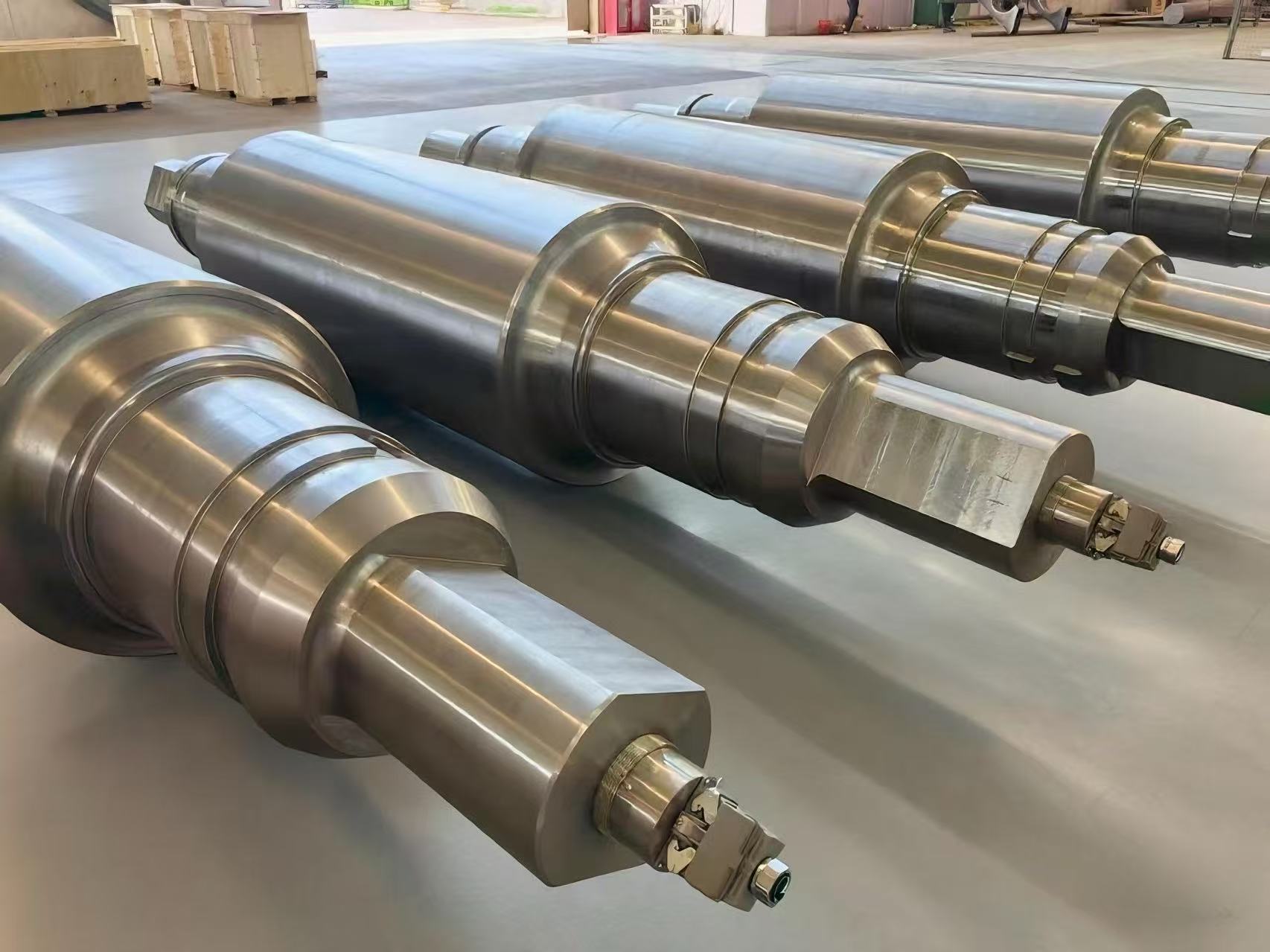
Selecting the appropriate cold rolling mill roll material requires matching the alloy to the specific mechanical demands of the mill. 9Cr2Mo remains the industry standard for a reason. It is highly effective for standard reversing mills, skin pass mills, and continuous tandem mills processing low-to-medium carbon steel. In these environments, the rolling loads are predictable, and the thermal stresses are manageable.
This grade is best suited for operations where roll changes are dictated by scheduled surface texturing rather than premature wear. For example, if a mill pulls rolls every shift strictly to reapply an Electron Discharge Texturing (EDT) or shot-blasted finish, the extreme wear resistance of a higher alloy may not be fully utilized. A 9Cr2Mo forged steel roll provides a reliable, consistent performance baseline for well-controlled rolling environments processing standard gauges and materials.
Mills running commercial quality (CQ) or drawing quality (DQ) mild steels rarely generate the extreme contact pressures required to justify a higher alloy. In these applications, 9Cr2Mo delivers excellent performance, predictable grinding behavior, and reliable campaign lengths without over-engineering the solution.
The operational landscape shifts dramatically when rolling advanced materials. Upgrading to a 9Cr3Mo forged roll becomes a structural requirement when processing high-strength low-alloy (HSLA) steels, advanced high-strength steels (AHSS), stainless steels, or silicon steels. These materials exert extreme contact pressures and require massive reduction forces, pushing standard 9Cr2Mo rolls past their fatigue limits.
High-speed tandem mills also benefit from this upgrade. The thermal buildup in the roll bite at high speeds requires a material highly resistant to thermal softening. Furthermore, when specifying a 9Cr3Mo forged backup roll, the deep sub-surface shear stresses demand maximum fatigue resistance. Backup rolls must distribute massive loads evenly across the forged steel work roll.
The enhanced toughness of 9Cr3Mo prevents deep spalling in the backup roll, ensuring uniform pressure distribution and preventing catastrophic mill failure. When rolling dual-phase (DP) or transformation-induced plasticity (TRIP) steels, the separating forces can exceed 2000 tons. Only a highly alloyed, deeply hardened roll can withstand these forces continuously without yielding or cracking.
The decision to upgrade roll materials directly impacts the daily rhythm of the mill. Implementing 9Cr3Mo extends the campaign length, which is the total tonnage rolled before the roll must be removed for maintenance. By increasing the campaign length, mills drastically reduce the frequency of unplanned stoppages. Every roll change requires crane time, operator intervention, and lost production minutes.
Minimizing these interruptions optimizes the overall equipment effectiveness (OEE) of the entire rolling line. A mill that stops twice a shift for roll changes loses significant threading and acceleration time. Extending that to one change per shift yields immediate production gains. Furthermore, the reduction in severe damage events, such as deep spalling, means rolls spend less time in the roll shop undergoing heavy corrective grinding.
A roll that only requires a light redress to restore its profile and surface finish returns to active duty much faster than a roll that must be ground down heavily to remove sub-surface cracks. This keeps the active roll inventory smaller and more efficient, reducing the need for massive backup stocks.
Upgrading the roll material requires adjustments in the roll shop. 9Cr3Mo possesses higher retained hardness and a denser network of tough carbides. This requires more rigid grinding equipment to prevent vibration and chatter during the machining process. Standard aluminum oxide grinding wheels may glaze over quickly or wear prematurely when cutting into 9Cr3Mo.
Roll shops must often transition to specific abrasive wheel selections, such as cubic boron nitride (CBN) wheels, to efficiently machine these higher-alloy rolls. Optimized grinding parameters are mandatory. Feed rates must be carefully controlled, and coolant flow must be continuous and high-volume to prevent localized heat buildup.
Improper grinding of a 9Cr3Mo roll can induce grinding cracks. These are microscopic surface fractures caused by localized thermal expansion under the grinding wheel. Once the roll is placed back under rolling loads, these micro-cracks will rapidly propagate into major spalls. Coolant filtration systems must also be upgraded to filter out fine carbide particulate, typically down to 5 microns, to prevent scratching the freshly ground roll surface.
Grinding Parameter | Standard 9Cr2Mo Setup | Optimized 9Cr3Mo Setup |
|---|---|---|
Abrasive Wheel Type | Aluminum Oxide (Al2O3) | Cubic Boron Nitride (CBN) or Ceramic Blend |
Wheel Speed (m/s) | 30 - 35 | 40 - 45 (Requires rigid spindle) |
Infeed Rate (mm/pass) | 0.02 - 0.03 | 0.01 - 0.015 (Lighter passes required) |
Coolant Filtration | Standard (20 micron) | Fine (5 micron) to prevent carbide scratching |
The chemical composition on a specification sheet is only the starting point. The actual performance of the roll depends entirely on the execution of the forging and heat treatment processes. When evaluating a forged roll manufacturer, the forging reduction ratio is a critical metric. A minimum forging ratio of greater than 3:1 is required to properly consolidate the ingot centerline, close internal voids, and ensure a dense, uniform microstructure throughout the barrel.
Vetting suppliers requires a deep dive into their heat treatment capabilities. Look for manufacturers utilizing dual-frequency progressive induction hardening. This technology uses low frequency (e.g., 50Hz) for deep heating and high frequency (e.g., 250Hz) for surface heating simultaneously. This allows for precise control over the depth and uniformity of the hardened layer.
Additionally, cryogenic treatment protocols are essential for high-alloy rolls like 9Cr3Mo. Sub-zero treatments, often reaching -120°C, eliminate retained austenite, converting it into stable martensite. This prevents dimensional changes and unexpected hardening while the roll is in service. Rigorous Non-Destructive Testing (NDT) standards, including ultrasonic testing for internal voids and magnetic particle inspection for surface cracks, must be non-negotiable.
Ordering a roll based solely on a generic grade designation introduces significant operational risk. To maximize performance, engineering teams must provide the manufacturer with exact mill parameters. Specify the maximum rolling load, maximum mill speed, coolant type, strip material properties, and target campaign length. This data allows the manufacturer to engineer a custom alloy steel roll with a tailored heat treatment profile that matches the exact stresses of your mill.
Risk mitigation continues through the delivery phase. Always request detailed inspection certificates prior to accepting shipment. These certificates must include the verified chemical composition from ladle analysis, mechanical property testing results, and comprehensive hardness mapping across the barrel and journals.
Full NDT reports, including Ultrasonic Testing (UT) to standards like SEP 1921 class E/e, and Magnetic Particle Inspection (MPI), must be reviewed. Verifying these metrics ensures the roll meets the structural requirements necessary for safe, high-speed cold reduction. Skipping these verification steps can lead to catastrophic roll failure in the mill, resulting in massive downtime and equipment damage.
Audit your current roll failure logs to classify removal reasons into wear, thermal fatigue, or spalling categories.
Calculate the average usable hardened depth of your existing inventory to determine if premature scrapping is occurring.
Consult with your roll shop manager to verify if current grinding equipment can handle the higher retained hardness of a 3% Molybdenum alloy.
Request a trial run of a higher-alloy roll on a single mill stand experiencing the highest contact pressures to measure campaign extension.
A: The primary difference is the Molybdenum content (approx. 2% vs. 3%). The higher Mo in 9Cr3Mo provides deeper hardenability, better resistance to thermal softening, and improved protection against sub-surface spalling under heavy rolling loads.
A: While possible for light reductions or skin pass operations, rolling harder materials like stainless steel typically requires the enhanced wear resistance and fatigue strength of a 9Cr3Mo or 5% Cr roll to prevent rapid surface degradation and ensure strip quality.
A: A 9Cr3Mo forged backup roll offers superior deep hardenability and resistance to contact fatigue. This is critical for withstanding the massive, continuous Hertzian stresses transferred from the work rolls without developing deep sub-surface cracks.
A: Yes, higher Molybdenum grades require more stringent, time-consuming heat treatment requirements. This includes precise induction hardening and mandatory cryogenic treatments to eliminate retained austenite, ensuring dimensional stability and maximum hardness.
A: Upgrading the cold rolling mill roll material to a more fatigue-resistant grade like 9Cr3Mo reduces the frequency of unplanned roll changes caused by thermal cracking, edge wear, or spalling, directly increasing overall mill uptime and throughput.
A: Yes. Due to its higher retained hardness and dense carbide structure, 9Cr3Mo requires more rigid grinding equipment, specific abrasive wheels (like CBN), and optimized feed rates with heavy coolant flow to prevent grinding chatter and micro-cracking.


