


Views: 0 Author: Site Editor Publish Time: 2026-11-30 Origin: Site


The calendering process fundamentally dictates lithium battery performance, directly controlling electrode porosity, energy density, and overall cycle life. As manufacturers scale production, a critical challenge emerges: balancing the initial capital expenditure of equipment against long-term operational costs, surface integrity degradation, and downtime frequency. Moving beyond generic equipment sourcing requires a rigorous technical evaluation of metallurgy, surface engineering, and automation compatibility. Success depends on precisely matching roll specifications with overall production line capacity, specific battery formats, and downstream assembly requirements. Choosing the right Battery Electrode Calender Rolls ensures uniform compression, preventing defects that compromise battery safety and efficiency. This guide breaks down the essential criteria for selecting high-performance rolls, from material science to dynamic gap control, equipping you with the knowledge to optimize your electrode manufacturing process.
Surface hardness and uniformity directly correlate to electrode thickness consistency and downstream yield.
Material selection (e.g., 9Cr3Mo vs. standard grades) impacts roll lifespan under high-temperature/high-pressure calendering cycles.
Calender roll geometry, dynamic gap control, and thermal management are as vital as the forging process itself.
Long-term operational evaluation must account for regrinding cycles, maintenance intervals, and seamless equipment integration.
Electrode porosity and density serve as non-negotiable performance indicators for electric vehicle (EV) and consumer electronics batteries. During the coating process, active materials, conductive agents, and binders form a relatively loose structure on the metal current collector. Calendering compresses this matrix, reducing volume and increasing volumetric energy density. If the porosity remains too high, electron transport suffers, increasing internal resistance and generating excess heat during discharge. If the porosity is too low, electrolyte wetting becomes restricted. This limits ion mobility, reduces rate capability, and shortens the overall cycle life of the cell.
Understanding the physical changes during this compression phase requires advanced modeling. Engineers leverage Discrete Element Method (DEM) analysis principles to predict how individual particles interact under extreme pressure. DEM simulations track the displacement, deformation, and fracture of microscopic particles. This allows manufacturers to tailor electrode structures, ensuring optimal particle contact without crushing the fragile active material spheres. By analyzing these stress distributions, engineers can specify the exact linear pressure required to achieve target density without compromising the structural integrity of the coating.
The physical interface between the machine and the material is equally critical. Roll surface finish directly influences the adhesion of active materials to current collectors. A surface that is too rough causes uneven stress distribution, leading to micro-cracking in the coating layer. Conversely, an improper finish can lead to material sticking. When active material adheres to the roll, it causes delamination from the foil, resulting in immediate yield loss and potential catastrophic failure during battery operation.
Translating these process requirements into hardware specifications demands precision engineering. Calendering equipment must deliver massive linear pressure uniformly across the entire web width. Furthermore, independent temperature control for the upper and lower rolls is essential to manage the thermal dynamics of different binder systems. Operators must also control the linear motion direction precisely as the electrode enters the roll gap. This ensures smooth feeding, maintains web tension, and prevents wrinkling or tearing of the ultra-thin copper or aluminum foils.
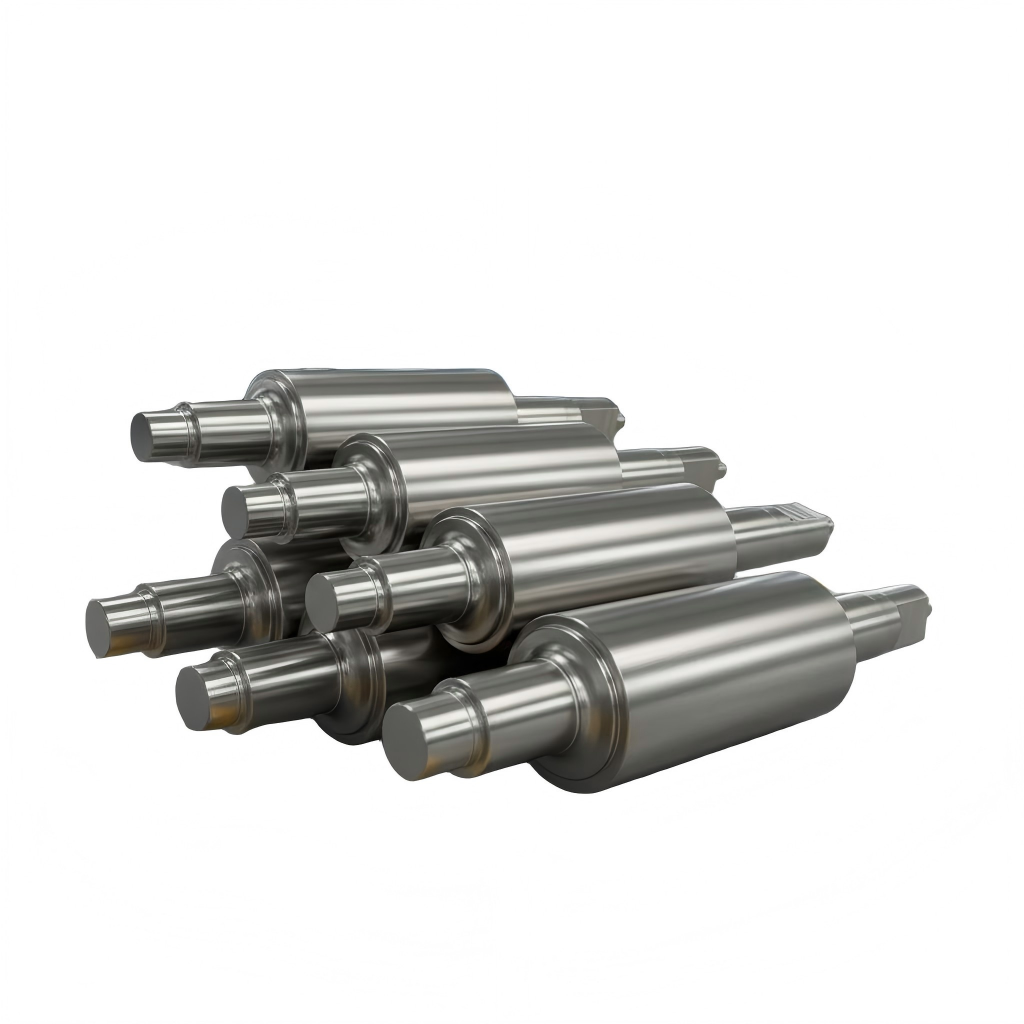
High-stress, continuous manufacturing environments demand robust equipment. Standard cast rolls simply cannot withstand the immense, repetitive pressures required for modern lithium-ion battery production. A Forged Calender Roll is an absolute necessity for these applications. The forging process applies immense compressive forces to the heated steel billet. This aligns the grain structure of the metal, eliminates internal voids, and significantly enhances mechanical strength. Forged steel exhibits superior fatigue resistance, allowing it to endure millions of compression cycles without failing.
When evaluating materials, the 9Cr3Mo Electrode Calender Roll stands out as a premier choice. This specific alloy offers an exceptional balance of high surface hardness, deep hardenability, and excellent thermal stability. During continuous operation, rolls generate and absorb significant heat from the calendering process. 9Cr3Mo maintains its structural integrity and dimensional stability even under these fluctuating thermal loads, preventing warping or expansion that would alter the roll gap.
The performance of this alloy stems from its precise chemical composition. Chrome drastically improves hardenability and wear resistance. It creates a robust surface capable of withstanding highly abrasive cathode materials, particularly high-nickel formulations. Molybdenum enhances high-temperature strength and prevents temper brittleness. This ensures the roll does not crack under thermal stress during heated calendering operations. Vanadium refines the grain structure, further boosting toughness and resistance to surface fatigue. Together, these elements create a metallurgical profile perfectly suited for battery manufacturing.
Relying on low-grade casting or insufficient forging methods introduces severe risks to high-speed production lines. Cast rolls often harbor microscopic porosities. Under heavy calendering pressure, these hidden defects propagate into surface cracks. These defects transfer directly onto the electrode, causing thickness variations, active material shedding, and ultimately, battery short circuits. Investing in high-quality metallurgy prevents these catastrophic line stoppages and ensures consistent product quality.
Selecting the right equipment requires scrutinizing several technical dimensions to ensure seamless operation and high yield. You must evaluate the physical geometry, thermal capabilities, and dynamic control systems of the rolls using the criteria outlined in the table below.
Evaluation Metric | Technical Significance |
|---|---|
Dimensional Accuracy | Ensures uniform thickness; prevents "thickness stripes" in electrodes. |
Surface Integrity (Ra/Rz) | Optimizes adhesion; prevents material sticking and coating delamination. |
Thermal Management | Independent heating/cooling; regulates binder flow and foil expansion. |
Crowning/Cambering | Compensates for roll deflection; maintains parallel gap under load. |
Dynamic Gap Control | Real-time adjustment; accounts for variable incoming coating thickness. |
Tolerance requirements for roll diameter, roundness, and concentricity are exceptionally tight in battery manufacturing. Even micrometer-level deviations can cause "thickness stripes" in the electrodes. These inconsistencies lead to uneven current distribution during battery charging and discharging. This accelerates localized degradation and poses severe safety hazards, including lithium plating. Precision grinding must achieve near-perfect concentricity to guarantee uniform compression across the entire electrode width, ensuring every centimeter of the foil receives identical pressure.
Evaluating how the rolls interface with automated machinery is critical for modern gigafactories. The system must maintain precise linear motion and execute real-time gap adjustments during continuous operation. Hydraulic or servo-driven gap control systems must react instantly to variations in incoming coating thickness. Closed-loop feedback systems monitor the output thickness and adjust the roll gap dynamically. This ensures the final calendered electrode remains strictly within tolerance limits without requiring manual intervention or line stoppages.
Partnering with a reliable Electrode Calender Roll Supplier is just as important as the hardware itself. The most capable suppliers exhibit deep vertical integration. Sourcing from manufacturers who control the heat treatment and precision grinding processes in-house guarantees strict quality oversight. When these critical steps are outsourced to third-party vendors, traceability diminishes, and the risk of metallurgical inconsistencies rises significantly. In-house control ensures the final product meets exact engineering specifications.
Assessing manufacturer strength involves evaluating their track record in delivering rolls that offer seamless equipment compatibility. The calendering machine does not operate in isolation. It must integrate perfectly with automated coaters, mixers, and slitters. A proven supplier understands these upstream and downstream dependencies. They design rolls that fit flawlessly into the broader continuous manufacturing ecosystem, ensuring mechanical and software interfaces align perfectly with your existing production line architecture.
Stringent quality assurance benchmarks separate premium suppliers from the rest. Look for mandatory Ultrasonic Testing (UT) and Magnetic Particle Inspection (MPI) standards. UT identifies deep internal voids, inclusions, or forging flaws that could cause catastrophic roll failure under extreme pressure. MPI detects minute surface or near-surface cracks that would inevitably mar the electrode coating. Comprehensive documentation of these tests provides confidence in the structural integrity of the rolls.
Relying on generic equipment is a flawed approach. "Off-the-shelf" solutions are rarely optimal for advanced battery production. Custom Forged Roll Manufacturing serves as a strategic necessity. Customization allows engineers to match roll specifications with specific active material formulations, binder properties, and targeted production capacities. You can specify exact diameters, hardness profiles, and internal channel designs to optimize thermal transfer and mechanical stability for your unique cell chemistry.
Even the highest-quality Lithium Battery Electrode Roll will experience wear over time. Predicting the "wear-out" cycle is essential for maintaining production continuity. Abrasive cathode materials, particularly those containing hard ceramic coatings or high-nickel formulations, accelerate surface degradation. As the micro-roughness changes, electrode thickness consistency drifts. This leads to immediate yield losses and requires constant adjustment of the roll gap to compensate for the worn surface.
Implementing best practices for regrinding and re-hardening extends the operational life of the equipment. However, operators must carefully assess the limit of material removal before structural integrity is compromised. Each regrinding cycle removes a fraction of a millimeter from the hardened case depth. Once this hardened layer is depleted, the roll must undergo re-hardening. This is a complex process that requires returning the roll to a specialized facility to restore its original mechanical properties without inducing thermal distortion or cracking.
Implement predictive maintenance protocols using real-time data logging to track hydraulic pressure anomalies and gap variations.
Utilize vibration monitoring sensors on roll bearings to detect early signs of fatigue, imbalance, or misalignment before surface damage occurs.
Maintain a strategic inventory management system for spare roll sets, ensuring a perfectly matched, pre-conditioned pair is always ready for immediate swap-out.
Schedule regular surface roughness profiling using portable profilometers to track degradation trends and plan regrinding intervals accurately.
Train maintenance personnel on specialized handling procedures to prevent accidental surface impacts during roll installation and removal.
Sourcing the right calendering equipment requires a structured, data-driven approach. Establishing a weighted decision matrix is the most effective way to evaluate potential solutions. This matrix should heavily weight expected lifespan, automation compatibility, and specific performance metrics over mere initial acquisition costs. Factoring in the ability to hold tight thickness tolerances at high line speeds provides a much clearer picture of the equipment's true value to your manufacturing operation.
When defining shortlisting criteria, prioritize technical transparency. Suppliers must provide comprehensive DEM analysis capabilities and empirical verification data rather than relying on low-cost bidding tactics. A supplier's ability to prove their metallurgical claims through certified testing data is non-negotiable. Request detailed case studies showing how their specific roll geometries and material choices improved yield in similar battery production environments.
Ultimately, successful procurement means transitioning from a transactional purchasing model to a consultative relationship with manufacturers. This partnership allows engineering teams to iterate on roll design based on real-world pilot production data. By sharing thickness variance data and wear patterns with your supplier, you can continuously refine surface finishes and crown profiles to maximize yield for future equipment iterations.
Audit your current electrode thickness variance to establish a baseline for required roll tolerances.
Request certified UT and MPI inspection reports from prospective roll manufacturers before finalizing any purchase orders.
Map out the thermal requirements of your specific binder systems to determine the necessary heating and cooling channel configurations.
Develop a rotational inventory plan for spare rolls to eliminate line stoppages during mandatory regrinding cycles.
A: For optimal wear resistance and fatigue strength, a 9Cr3Mo electrode calender roll typically requires a surface hardness between 65 and 68 HRC. This extreme hardness prevents surface indentations from hard active particles while maintaining sufficient core toughness to withstand heavy, continuous rolling pressures without catastrophic cracking.
A: The regrinding frequency depends heavily on the abrasiveness of the active materials and production volume. Generally, high-volume lines processing abrasive cathode materials may require regrinding every 3 to 6 months. Regular surface roughness inspections and continuous monitoring of electrode thickness variations should dictate the exact maintenance schedule.
A: Independent temperature control allows operators to optimize the flow state of specific polymer binders without overheating the current collector. Setting different temperatures for the upper and lower rolls prevents web curling, improves coating adhesion, and ensures uniform density across the entire thickness of the electrode matrix.
A: The most frequent failure modes include surface spalling due to subsurface fatigue, micro-cracking from thermal shock, and loss of dimensional accuracy caused by abrasive materials. Improper crowning can also lead to uneven pressure distribution, causing localized severe wear and immediate electrode rejection.
A: Yes, the difference is substantial. Forged rolls possess a dense, aligned grain structure free from internal voids, offering vastly superior fatigue resistance and strength. Cast rolls are prone to microscopic porosities that can propagate into cracks under high pressure, making them unsuitable for high-speed lithium battery calendering.
A: Custom forged rolls are engineered to exact dimensional specifications, ensuring seamless integration with existing servo-driven gap controllers, hydraulic pressure systems, and automated web handling guides. This precise matching prevents vibration, ensures accurate linear motion, and allows for real-time adjustments via the central machine control panel.


